
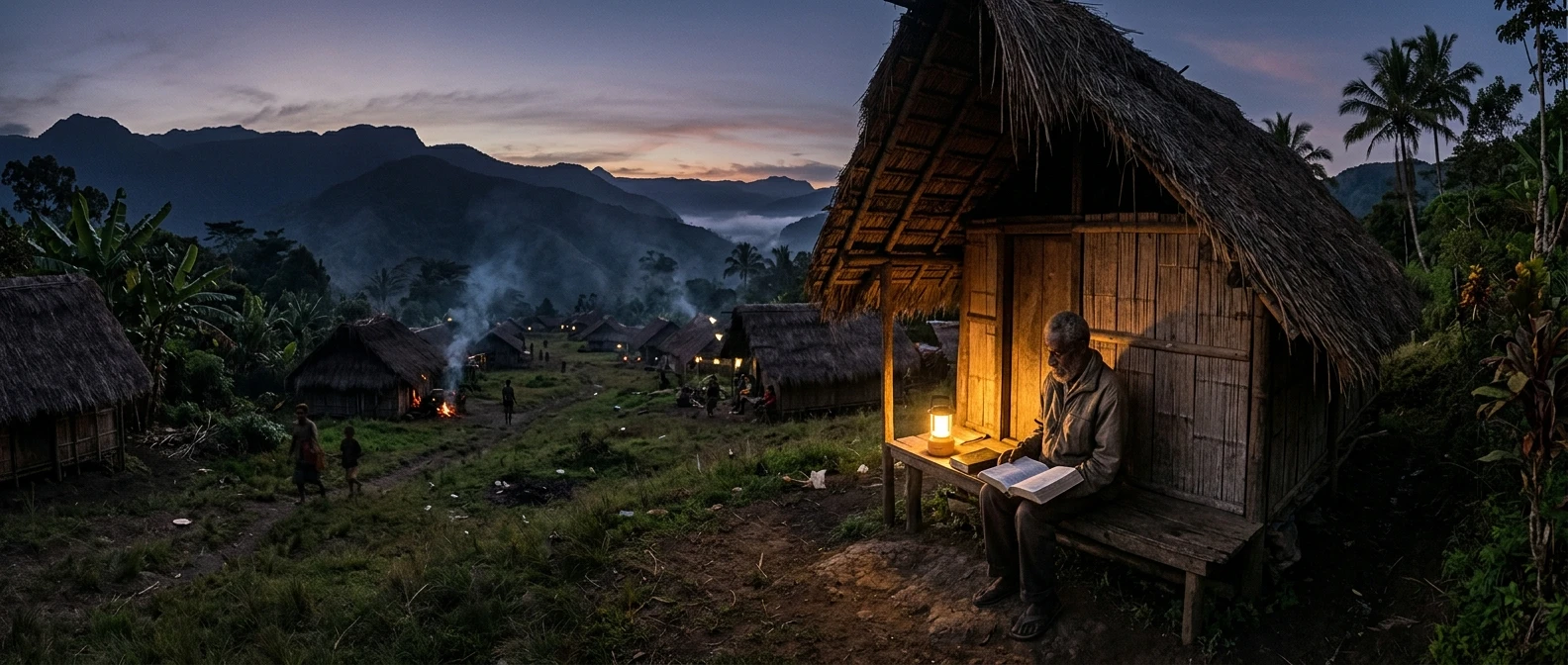
Light PNG began with a simple observation: the people doing the hardest work of ministry in Papua New Guinea are often doing it in the dark. I’m Paul Mondo, and this hub is where I keep the story of that work, the people carrying it, and the small, practical ways we’re trying to help.
What started as a solar lamp project in rural Simbu and Jiwaka has grown into something a little wider. The lanterns are still the center of it. But the hub now holds the whole picture: the partnership between supporters here and overseas, the accountability system that lets donors see what their giving actually does, and the short-term outreach work.
Why LIGHT PNG Started
Pastors, evangelists, and church workers across rural highlands of Papua New Guinea carry on their ministry after the sun goes down, the same as anywhere else. Bible studies, discipleship, prayer meetings: these don’t stop because there’s no electricity. What changes is how they get done, usually by kerosene lamp, sometimes by no light at all.
Kerosene is dim, it’s a fire risk in a thatch or timber house, and it runs out right when it’s needed most. Watching leaders work around that, night after night, is what led to the first solar lanterns going out to pastors in Simbu and Jiwaka. The goal was never complicated: give people who are already doing the work a tool that makes it safer and lets it continue past dark.
Matthew 5:14 says it plainly: “You are the light of the world. A city set on a hill cannot be hidden.” These leaders are already that city. A solar lantern doesn’t make them faithful. It just means their faithfulness doesn’t have to stop when the light does.
How We Serve Rural Churches With Accountability and Care
The people LIGHT PNG serves are pastors, evangelists, church planters, Bible teachers, and lay leaders in communities with no reliable electricity, along with the congregations and families around them. Many are bi-vocational, farming during the day and leading their churches at night, often without pay.
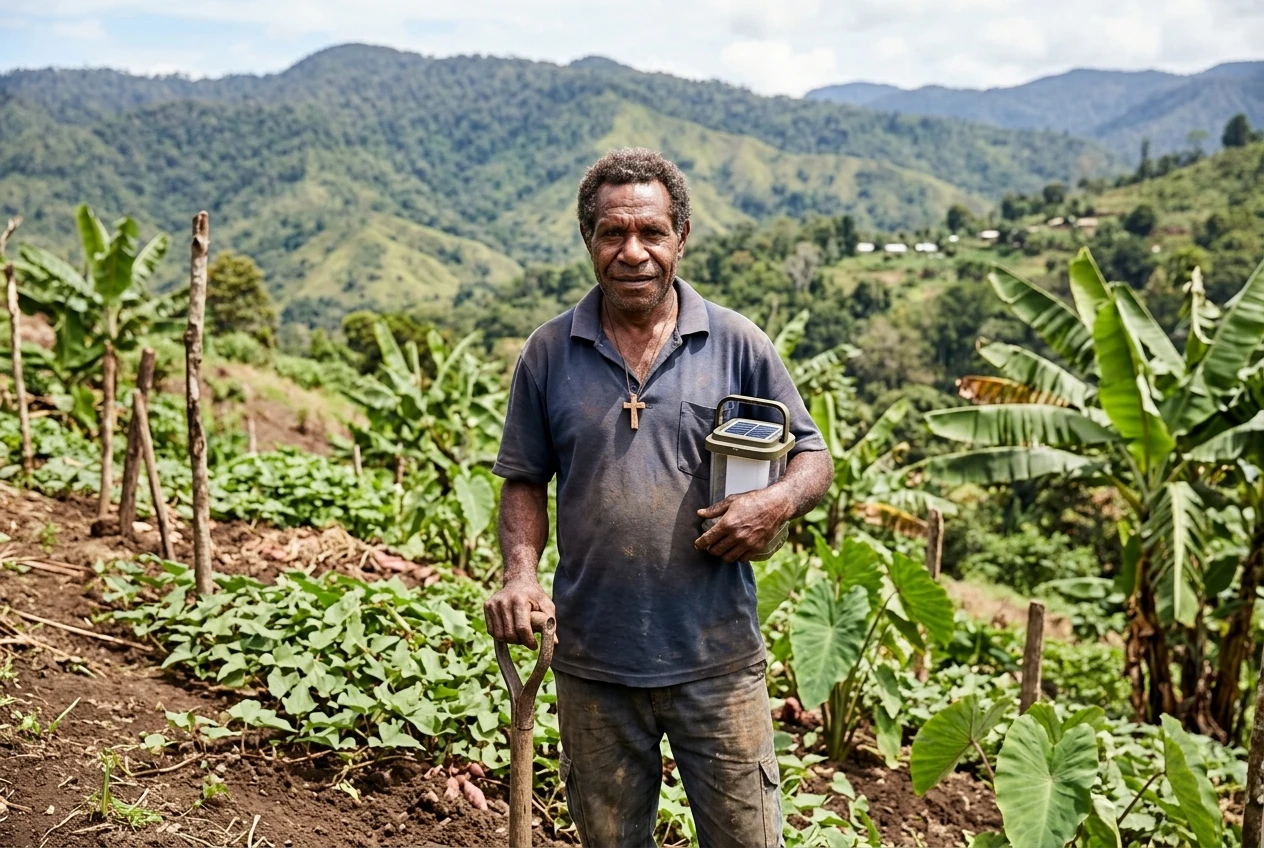
Local church leadership plays the central role in deciding who receives a lantern. They know their communities better than anyone visiting from outside ever could, and that local knowledge is what keeps the project from guessing at need instead of meeting it. Every recipient is recommended through these local channels, and basic details, name, church, ministry role, and a simple record of receipt, are gathered so the process stays clear and traceable.
Thirty to sixty days after a lantern is received, recipients are asked to send back a short report on how it’s being used: how many people it’s reaching, what nighttime ministry it’s made possible, what challenges have come up. These reports are how the project stays honest with itself and with the people who’ve given toward it. More of this kind of detail, including how distribution actually works on the ground, is covered on the LIGHT PNG solar lantern distribution page.
Our Hope for the Future
The aim ahead is steady growth rather than a single big push: reaching new communities each season rather than stopping after the first round, and handing more of the decision-making to local church leadership so the project depends less on any one person to keep running.
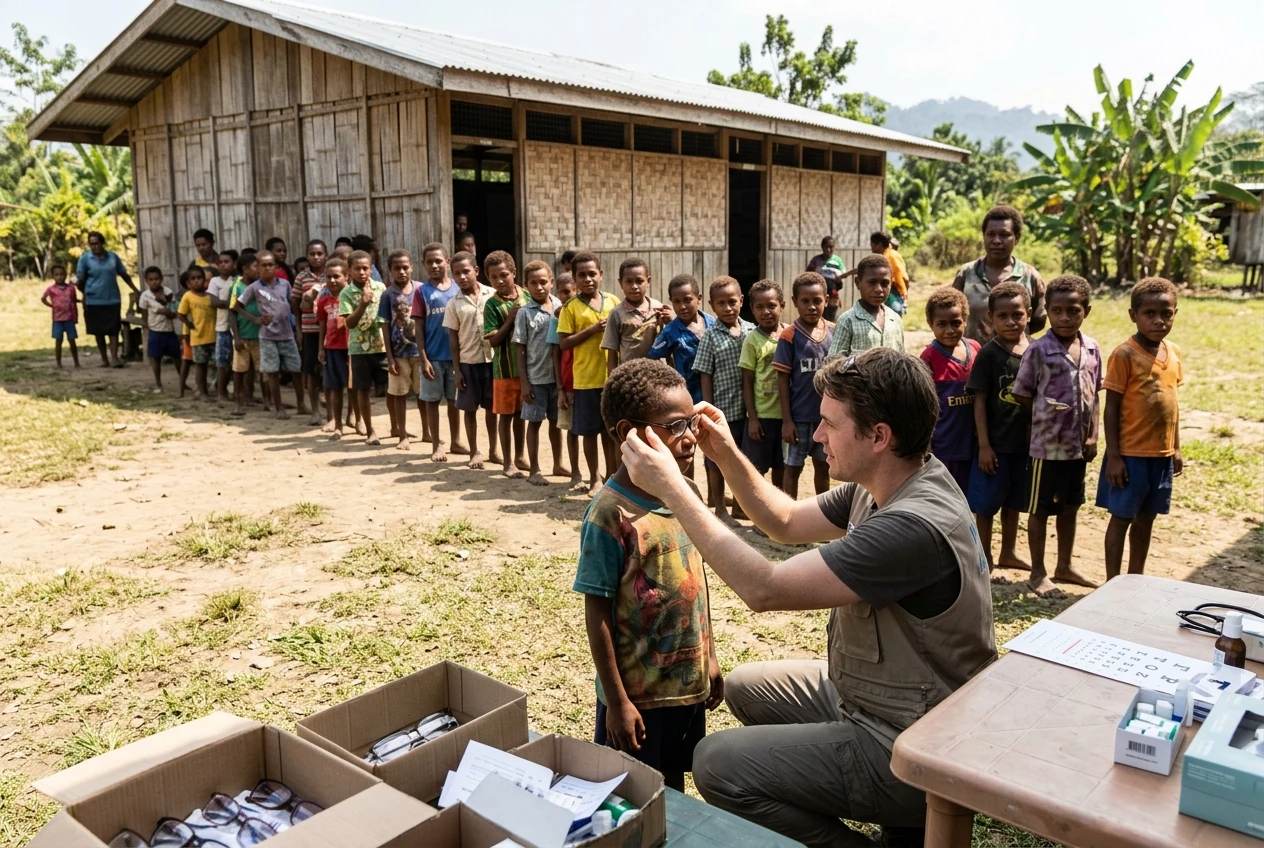
There’s also room to grow beyond lanterns. Charging stations, audio Bibles, and training that leaves a real skill behind, the kind a local leader can keep teaching long after a visiting team has gone home, are all part of where this is heading. The Ambuna Primary School visit, with its mix of spiritual teaching, first-aid training, and an eyesight clinic, is one example of what that looks like in practice.
None of this is about LIGHT PNG replacing local leadership. It’s about standing alongside it, so that whatever is given, light, training, or a pair of reading glasses, ends up strengthening a ministry that was already there before we arrived and will still be there long after.
If this is work you’d like to be part of, the Get Involve page has the ways to start.