
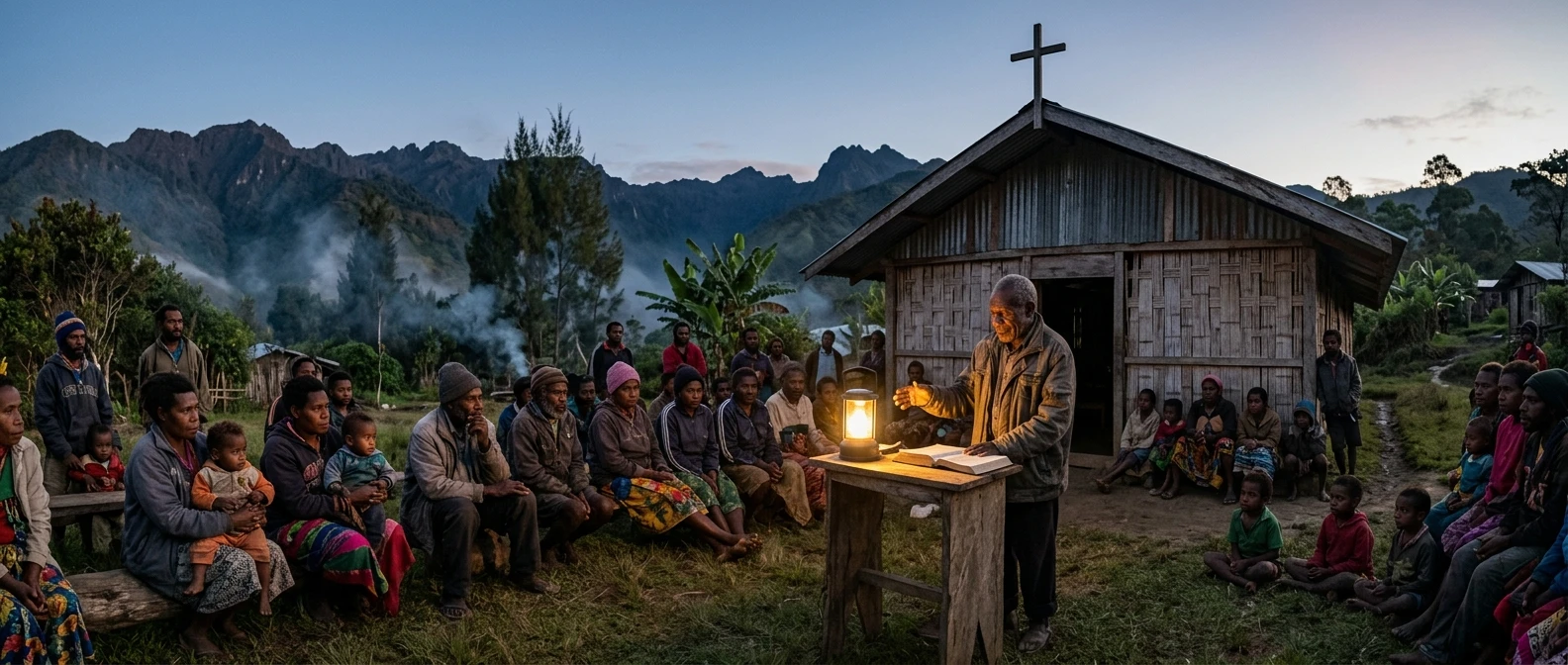
LIGHT PNG trains rural pastors, evangelists, and church workers to use, maintain, and steward their solar lanterns, so a tool meant to serve the Gospel for years does not fail after a few months through no fault of its own.
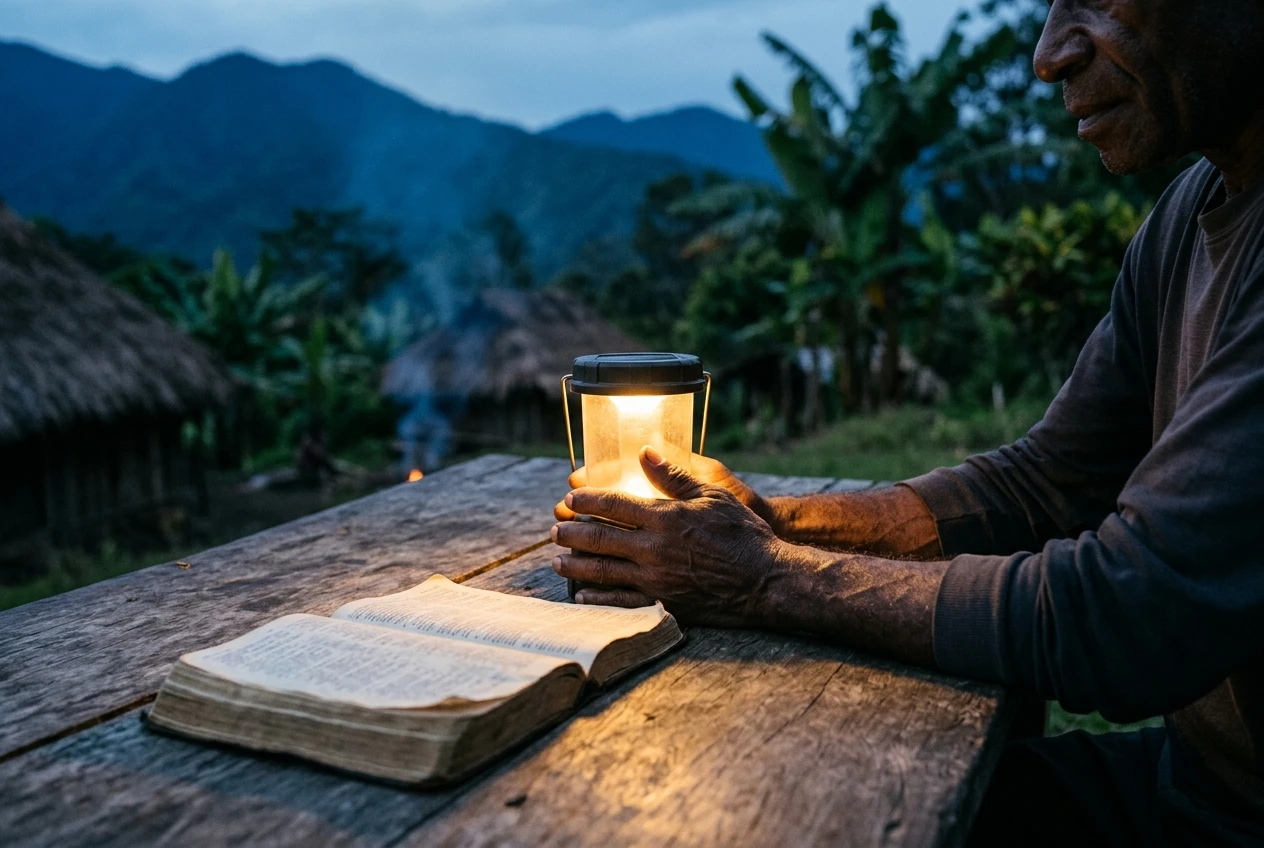
Picture a pastor in the Highlands preparing for an evening Bible study. The sun has dropped behind the mountains, families are gathering, and children are waiting to hear God’s Word. There is no electricity. For many pastors and evangelists across Papua New Guinea, this is simply what ministry looks like after dark, carried out by kerosene lamp, candlelight, or whatever light can be found. What that evening actually looks like is worth reading if you want a fuller picture before going further here.
A dependable solar lantern can change that evening. But a lantern is only the beginning of the difference it makes. Its value grows when the person holding it knows how to charge it properly, care for it, and protect it for the long term. That is why training and support sit at the center of the LIGHT PNG Solar Ministry. We equip the hands that hold these lanterns with the knowledge and confidence to use them well.
Why Training Matters in Rural PNG
Papua New Guinea’s mountains, scattered islands, and remote villages make reliable electricity hard to come by. Pastors may walk long mountain tracks or travel by boat to reach their congregations, and replacing a battery or a part can mean an expensive trip to a distant town. In these conditions, even a well-made lantern can fail early if it is used incorrectly.
The most common causes are ordinary ones: charging in shade or for too short a time, mishandled cables and ports, exposure to heavy rain, damage during travel, poor battery storage, missed early warning signs, and unsafe repair attempts. These are rarely signs of faulty equipment. More often, nobody ever showed the user how to care for it. A short demonstration at the time of distribution can prevent most of these problems before they start.
Our Approach: Five Training Priorities
Our guiding principle is simple: equip the ministry worker, protect the ministry resource, strengthen the Gospel mission. That principle breaks into five priorities: practical knowledge of how a solar lantern works, proper use for safe charging and lighting, preventive maintenance that stops avoidable problems before they happen, responsible stewardship of the lantern as a resource entrusted for ministry, and ongoing support so a recipient has somewhere to ask questions and report problems.
What the Training Covers
No technical background is needed. Sessions use plain language, hands-on demonstrations, and plenty of time for questions.
Understanding the lantern. Participants learn to identify the main parts, which vary by model: the solar panel, LED unit, rechargeable battery, charging input, USB output, switch, brightness controls, and indicators. They are encouraged to follow the manufacturer’s instructions for their particular model, since no two are exactly alike.
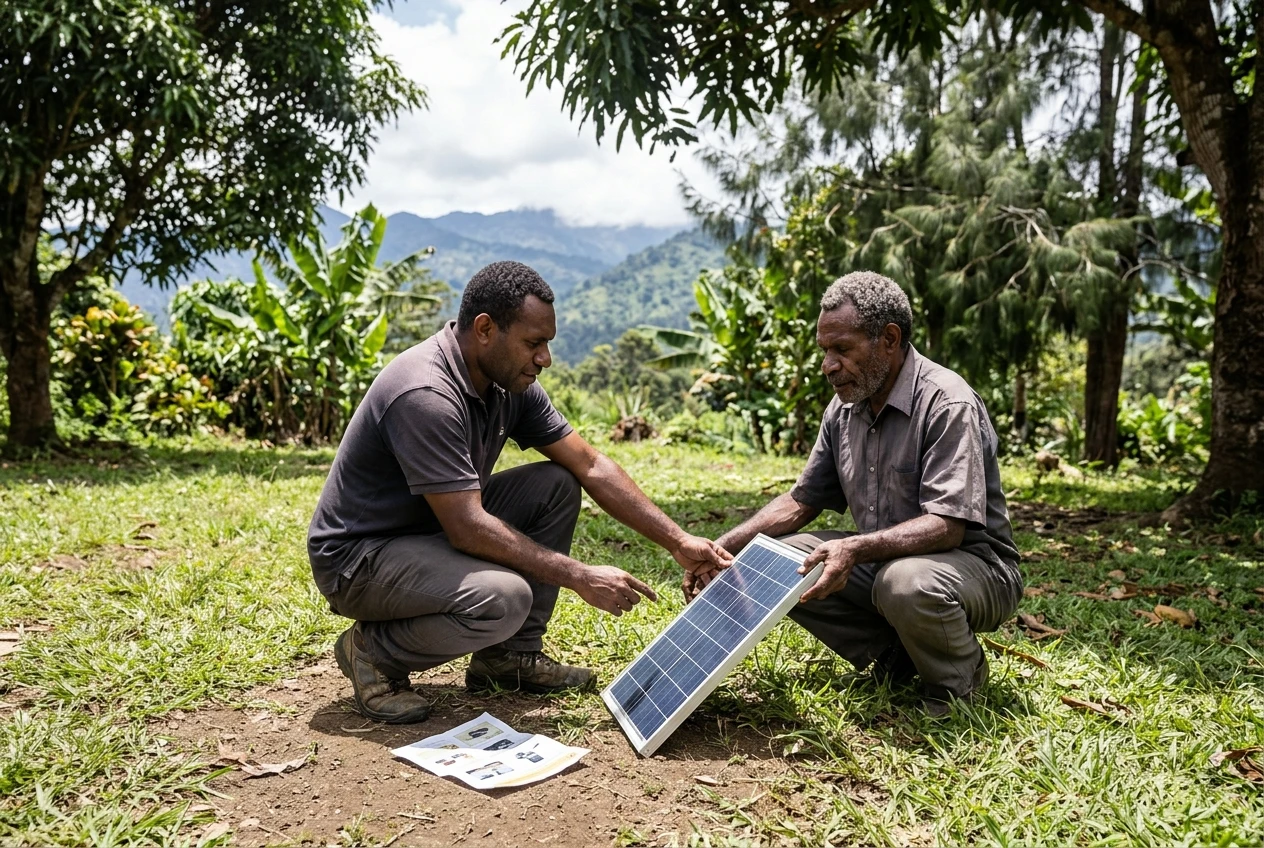
Proper solar charging. Participants learn to choose a sunny location for the panel, avoid shade from trees, roofs, and buildings, read charging indicators, plan for cloudy or rainy weather, keep connectors clean and dry, and use only approved cables and accessories. For a closer look at panel placement, see this guide to getting the most sun into a solar lamp. During several days of heavy Highlands rain, solar charging slows down considerably. A trained pastor knows to switch to a lower brightness setting and save stored energy for the most important evening gatherings rather than running the lantern at full strength until it dies.
Using the lantern in ministry. Trainers help recipients plan practical uses: light for evening Bible studies and prayer meetings, light for pastoral visits to homes without electricity, reading and fellowship for children’s ministry after dark, and portable light for travelling evangelists. Where a model has a USB output, it can also help keep a phone charged, though participants learn that this draws on the same battery and shortens lighting time. Ministry families have real household needs too, and training encourages wise, balanced use rather than unrealistic restrictions on a lantern a family also depends on.
Basic Care and Maintenance
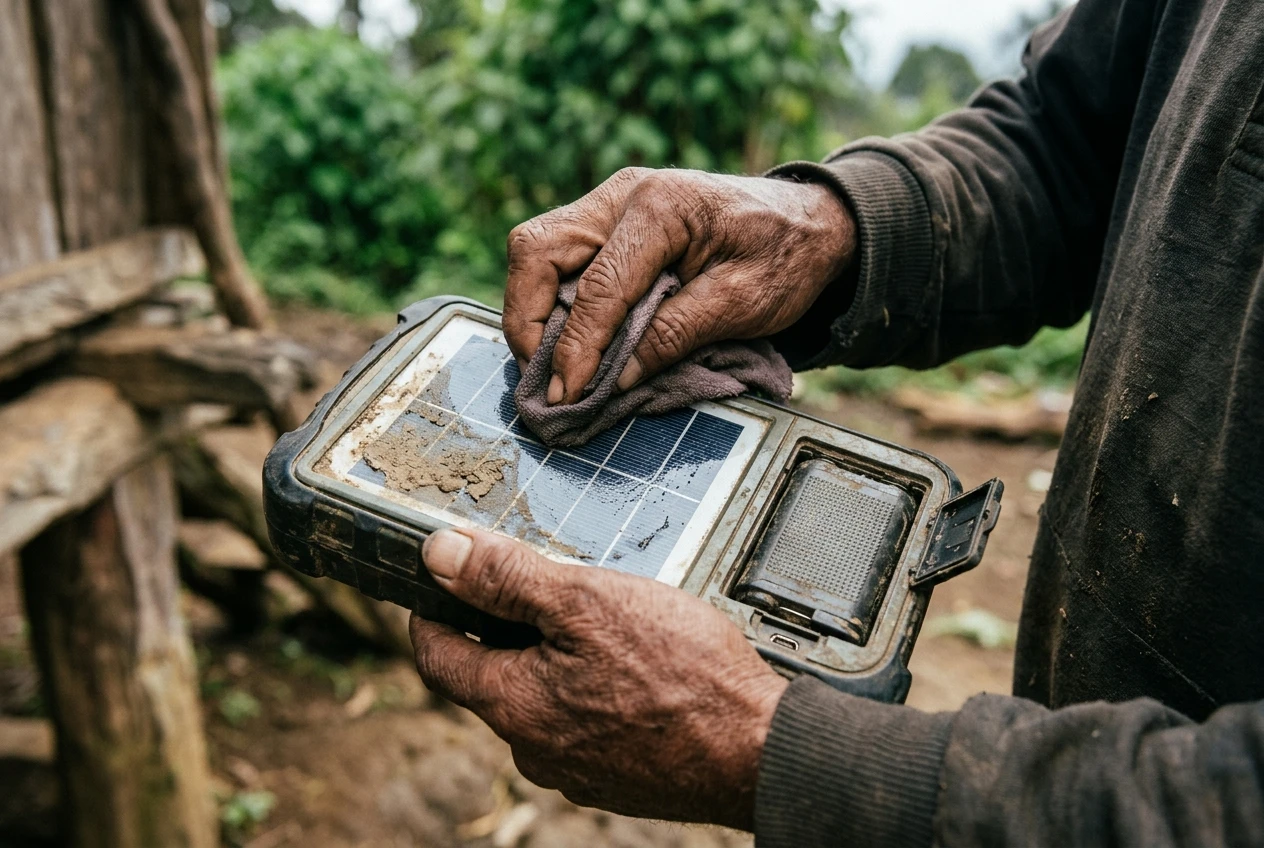
Good care noticeably extends a lantern’s useful life. Participants learn to keep panels clean, wiping away dust and mud with a soft, slightly damp cloth and avoiding abrasives or harsh chemicals. They learn to protect against water, since not every lantern is waterproof, and to check the water-resistance rating before leaving one out in the rain. They learn to prevent physical damage by packing securely for long journeys, protecting panels from scratches, keeping pressure off ports, and keeping equipment out of extreme heat.
Battery care gets particular attention: follow the charging instructions, store the lantern properly between uses, and never open a sealed battery compartment. This guide on making a solar lantern battery last for years covers the habits that matter most. A battery that is swollen, leaking, unusually hot, or damaged should not be used or charged under any circumstance. LIGHT PNG does not encourage recipients to open batteries, modify circuits, or bypass protective features. Some problems genuinely need a qualified technician.
Training Designed for Rural Communities
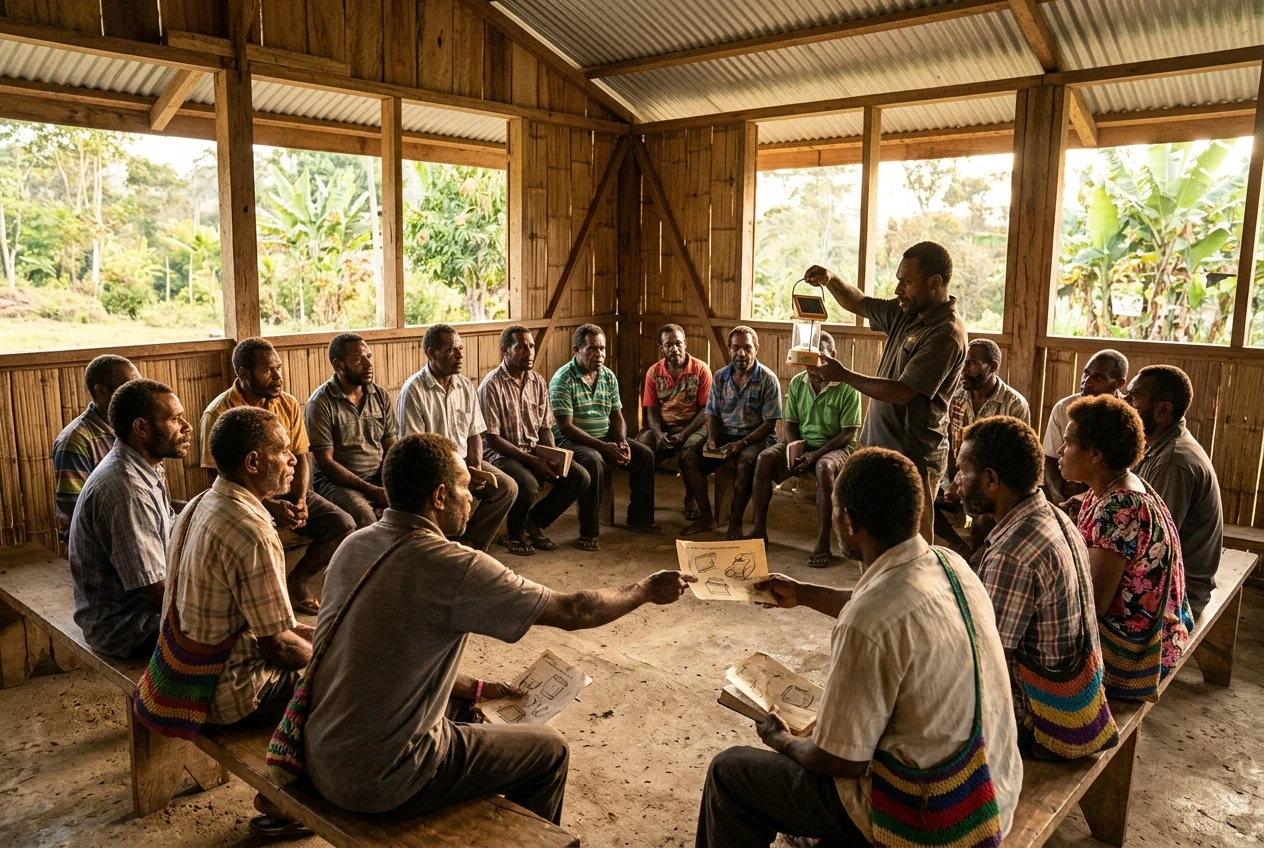
Methods that work in a city may not work in a remote village. Training is built around local realities: hands-on demonstrations where participants watch, practise, and ask questions; simple materials where resources allow, including illustrated guides, checklists, and model-specific instructions; language participants actually understand, whether Tok Pisin, English, or a local language; and delivery through existing church networks such as circuits, district gatherings, pastors’ meetings, and evangelist fellowships.
Building Local Capacity
Ministry is more sustainable when knowledge stays in the community rather than depending on someone travelling from a distant town for every small issue. LIGHT PNG works to develop local resource people wherever possible. Selected church leaders receive additional training so they can guide pastors in their own circuit on charging, maintenance, and basic troubleshooting, and pass technical concerns on to LIGHT PNG when needed. Young people, with supervision, can help with demonstrations, equipment records, and communication between churches and coordinators, and may later be introduced to further technical opportunities. Women serving in children’s ministry, women’s fellowship, outreach, and church administration are warmly encouraged to take part in training and leadership alongside everyone else.
Ongoing Support After Distribution
Many distribution projects hand out equipment, take photographs, and move on. What happens six months later, when a cable breaks or a battery weakens, is a different question. Responsible ministry includes follow-up wherever it is practical, which may include recipient records of name, church, district, lantern model, and distribution date, handled responsibly and collected only where necessary; follow-up communication by phone, text, WhatsApp, church representatives, or ministry visits; basic technical guidance and help deciding whether a professional repair is needed; warranty information where a manufacturer’s warranty applies; and performance monitoring that tracks recurring problems to improve future equipment choices and training.
Remote locations, transport costs, parts availability, and limited funds all affect how quickly a response can happen. Ongoing support is not a guarantee of immediate repair or free replacement. It is a commitment to practical, responsible help within the resources the ministry has at the time.
Faithful Stewardship
“Moreover it is required in stewards, that a man be found faithful.” (1 Corinthians 4:2, KJV)
Every lantern represents someone’s generosity, whether an individual donor, a family, a congregation, or a ministry partner. Caring for it honours that gift. Stewardship means charging it properly, keeping it clean, protecting it on the road, reporting problems early, and passing on what has been learned to others. When the tools God provides are cared for well, they can be put to better use in serving others.
Training as a Foundation for Sustainable Ministry
A sustainable solar ministry is one where equipment keeps serving long after distribution day. Training builds confidence, so a pastor can identify a basic problem instead of feeling helpless in the face of it. It encourages ownership, so recipients become active partners rather than passive recipients of a donation. It prepares people for the future, since skills in solar charging, battery care, and energy conservation can support community energy efforts well beyond this one project. And it builds relationships, giving us a chance to actually listen to the challenges, needs, and ideas of the people being served.
Measuring What Matters
The number of lanterns distributed matters, but it is not the whole story. We also track pastors and evangelists trained and churches represented, participants who complete practical demonstrations, lanterns still functioning at follow-up, technical problems reported and resolved through basic guidance, referrals made for professional repair, local resource people trained, and recipient feedback. We share these numbers with partners and donors on a regular basis, not only when something impressive happens, because an honest report is part of what faithful stewardship looks like.
Frequently Asked Questions
What is the purpose of the training? To equip rural pastors, evangelists, and church workers to use, care for, and maintain their solar lanterns responsibly, supporting long-term Gospel ministry.
Who can take part? Primarily pastors, evangelists, and church leaders involved in the LIGHT PNG Solar Ministry. Participation depends on location, resources, and the arrangements for each training event.
Do I need technical experience? No. Training is practical and suitable for all levels.
What language is used? English, Tok Pisin, or local-language explanations, depending on the participants and trainers available.
Can pastors learn to repair lanterns? They can learn user-level troubleshooting and preventive care. Repairs involving batteries, circuits, or damaged components should go to a qualified technician.
What if my lantern stops working? Follow the basic troubleshooting steps, then report unresolved problems through your project’s support arrangements. Repair or replacement depends on warranty, location, technical resources, and circumstances at the time.
Does LIGHT PNG provide ongoing support? Yes, within the resources available. The type and availability of support vary with location and circumstances.
Will every lantern last for years? No lantern has an unlimited life. Performance depends on quality, battery condition, usage, weather exposure, and care, and training helps reduce the preventable problems.
Can my church request training? Yes. Contact us with your location, the likely number of participants, and your ministry needs, and requests are considered according to priorities and available resources.
Can young people take part? Where appropriate, yes, under suitable supervision.
How can donors help? By supporting training expenses, educational materials, transport, communication, and technical assistance.
How You Can Partner With Us
Training works best as a shared effort. A few ways to be part of it: sponsor training by helping cover materials, transport, and communication; share technical expertise if you are a solar technician or renewable-energy professional who can assist with orientation or maintenance guidance; support the production of illustrated guides, checklists, and safety information; help identify suitable church leaders and community members to assist with training and follow-up; and pray for rural pastors, evangelists, ministry families, remote congregations, training participants, and the communities still waiting on reliable light.
Equipping Faithful Servants for Lasting Impact
A solar lantern is a small thing. But in the hands of a faithful pastor, it lights up Scripture reading, evening Bible studies, prayer gatherings, and pastoral visits that would otherwise happen in the dark. How well it serves depends partly on how well it is understood and cared for.
That is the reason training and support matter as much as the lantern itself. Through practical teaching, careful maintenance, ongoing encouragement, and local capacity building, LIGHT PNG helps rural ministry workers make the most of what they have been entrusted with.
“And let us not be weary in well doing: for in due season we shall reap, if we faint not.” (Galatians 6:9, KJV)
May every lantern become a useful tool for service, every training session build confidence and responsibility, and every partnership extend the reach of the Gospel across Papua New Guinea.
If you would like to sponsor a training session, offer technical expertise, or ask about hosting a training day in your district, you can get involved with LIGHT PNG here.