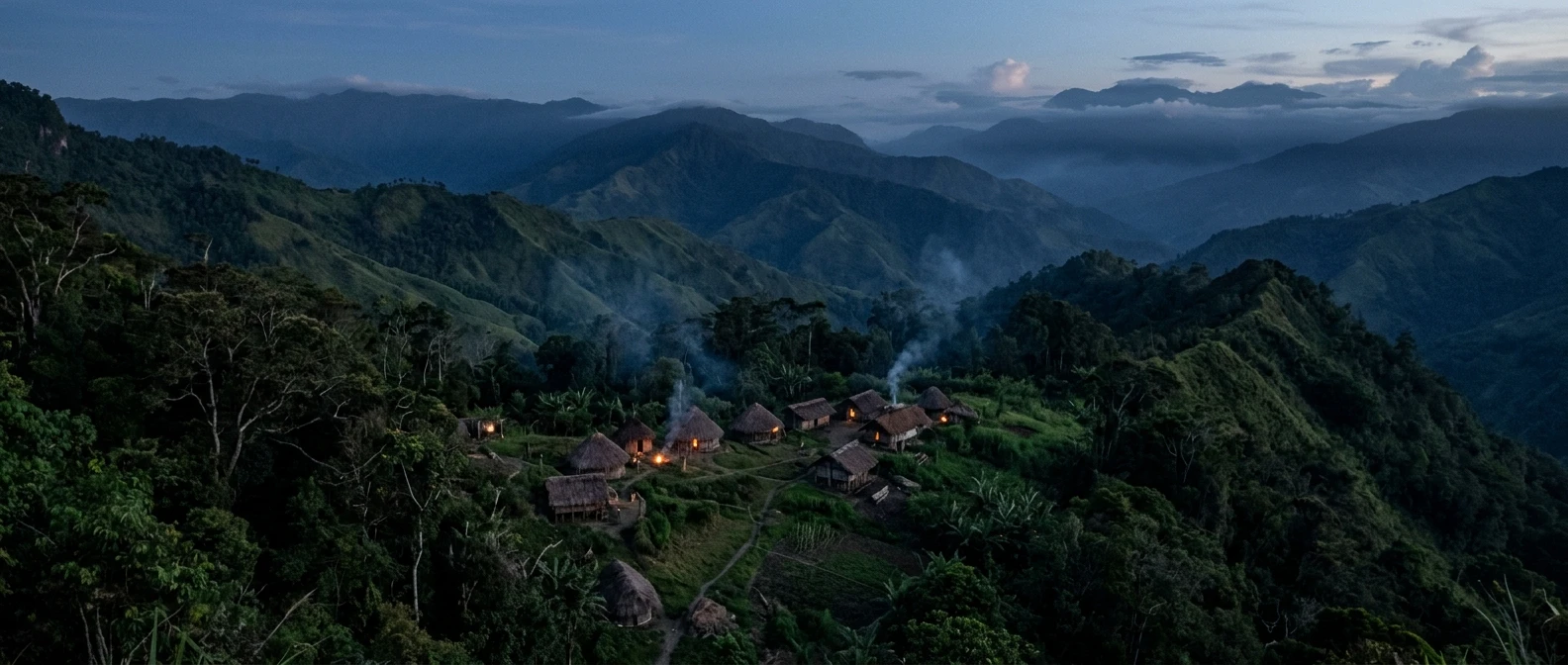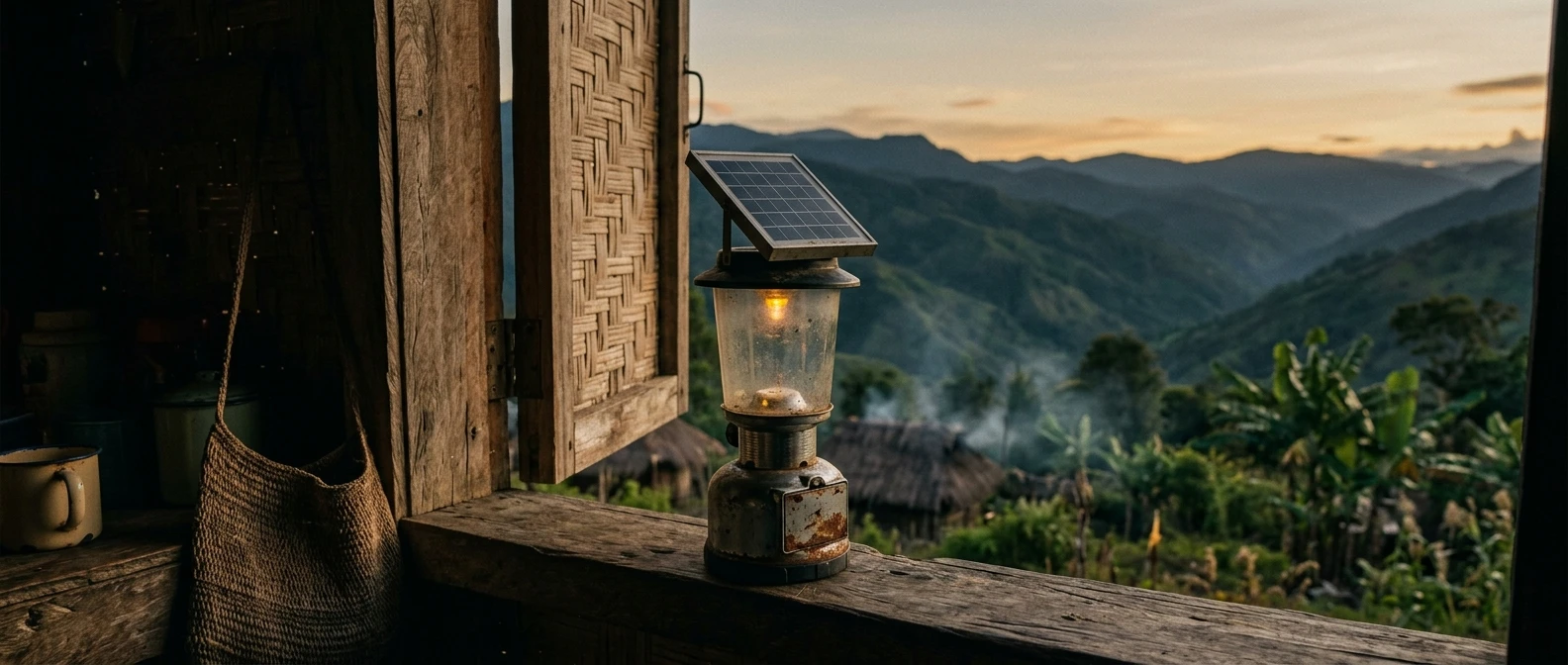

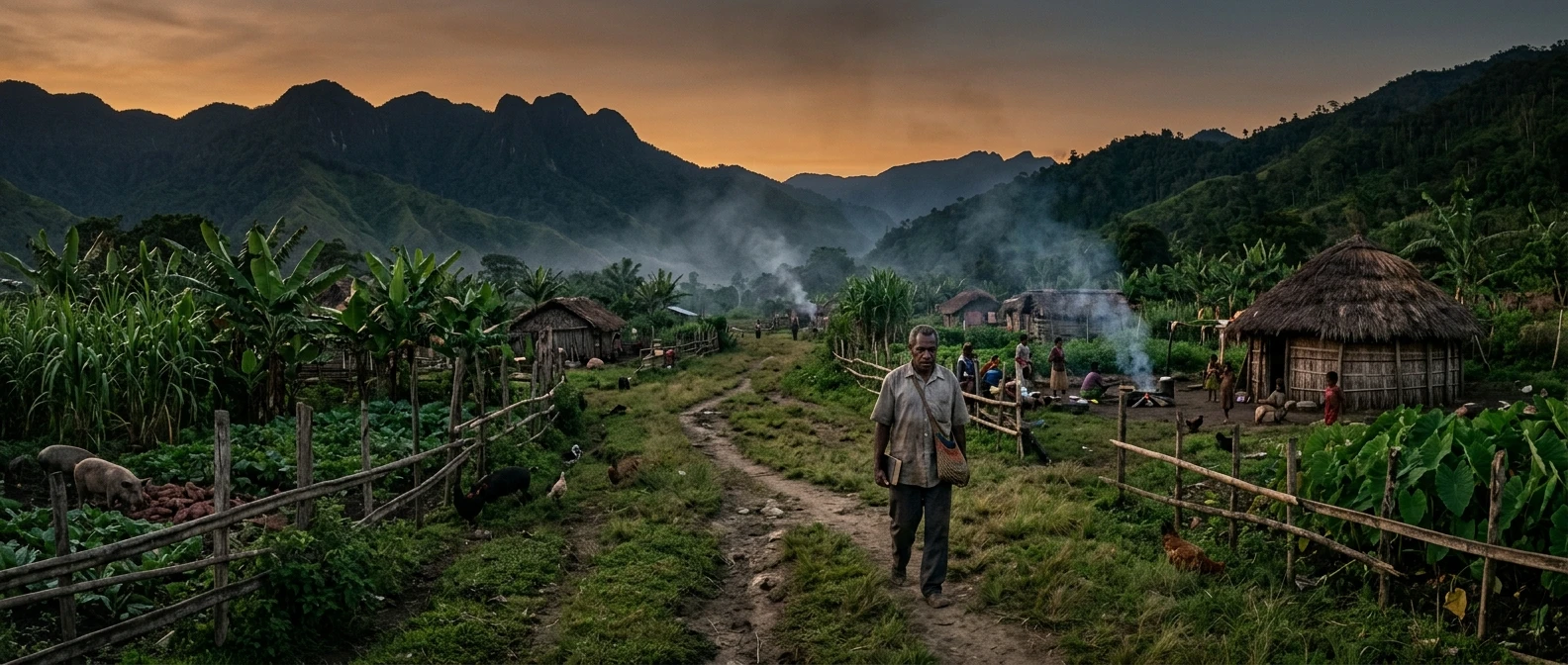
Picture a typical week for a bi-vocational pastor serving a rural congregation in highlands of Papua New Guinea. He has no salary from the church, so most of his days are spent the same way his neighbors’ are: in the garden, on a mountain path, or at a market stall. Ministry happens in whatever hours are left over, and in the Highlands, those hours run out fast. The sun sets by six, and after that, light becomes the one resource that decides what the rest of the week looks like.
This isn’t one man’s story. It’s the shape of a week that repeats itself across hundreds of villages, with small variations, every single week of the year.
Monday: farming by day, sermon prep by firelight
Monday starts in the garden. Kaukau needs weeding, coffee needs picking, firewood needs carrying. By the time the family eats and the dishes are cleared, it’s already dark outside.
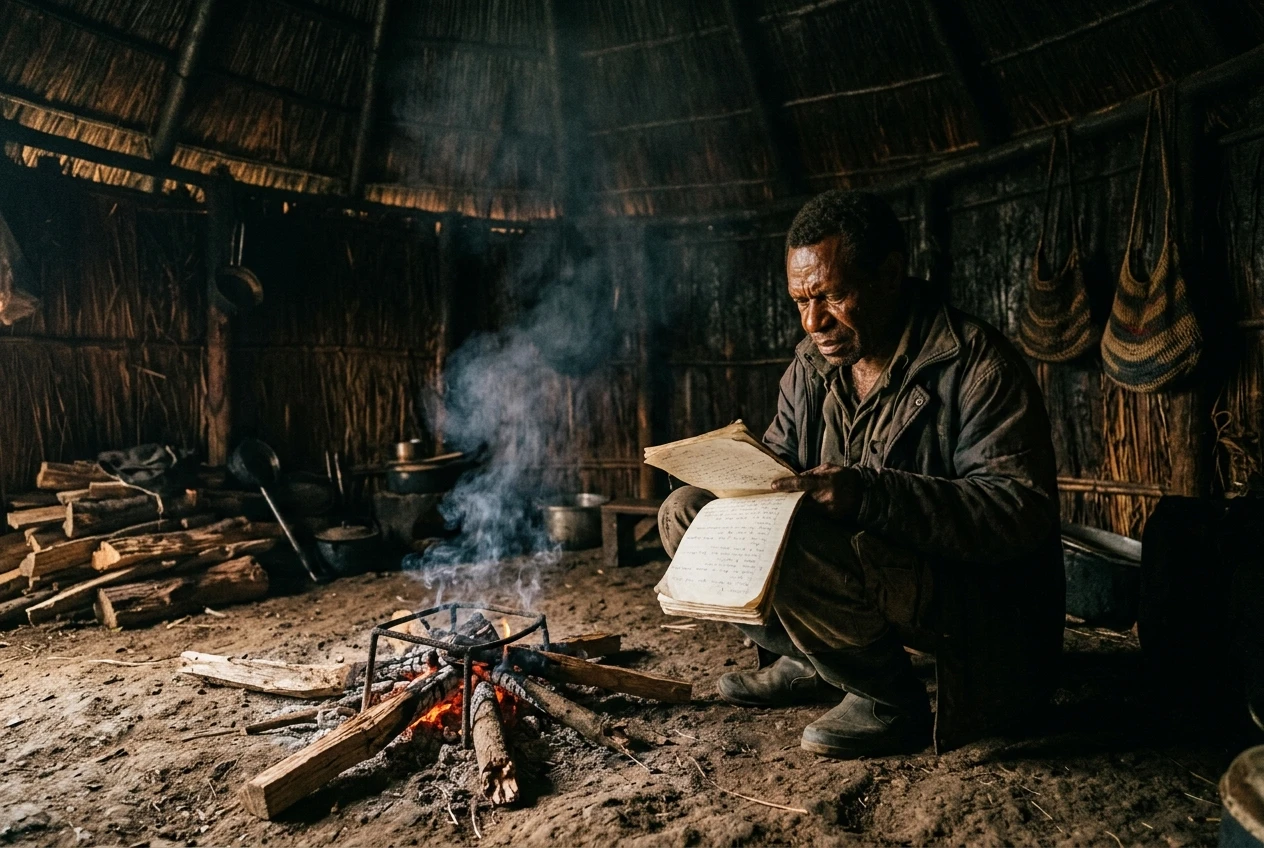
This is when sermon preparation would normally begin, except there’s rarely a lamp bright enough to read by. A fire gives off light, but it flickers, it smokes, and it sits too low to read a Bible comfortably for more than a few minutes at a time. Many pastors end up squinting at their notes by firelight, writing a few lines, then setting the pencil down because their eyes have started to water.
What should be an hour of focused preparation becomes twenty minutes of effort stretched thin across discomfort. The sermon gets written in fragments, if it gets written at all before Sunday.
Tuesday and Wednesday: home visits that end when the sun does
Pastoral visits are part of the week’s rhythm too: checking on a sick church member, sitting with a family going through a hard season, following up with someone who missed the last gathering. These visits often mean walking to another part of the village or further, along paths that aren’t lit and aren’t always safe after dark.
So the visits have to happen early, which means they have to be cut short. A conversation that needs another twenty minutes doesn’t get it, because the walk home has to happen while there’s still enough light to see the path. Real pastoral care, the kind that takes time and doesn’t rush, keeps getting squeezed into whatever daylight is left after farm work is done.
Wednesday night: a prayer meeting lit by kerosene, smoke, and risk
Midweek prayer meetings are often the heartbeat of a rural congregation, and they happen at night, because that’s the only time people are free to gather. Where there’s no electricity, the meeting is lit by whatever’s available: a kerosene lamp, a candle, sometimes a few bundled sticks burning in the middle of the floor.
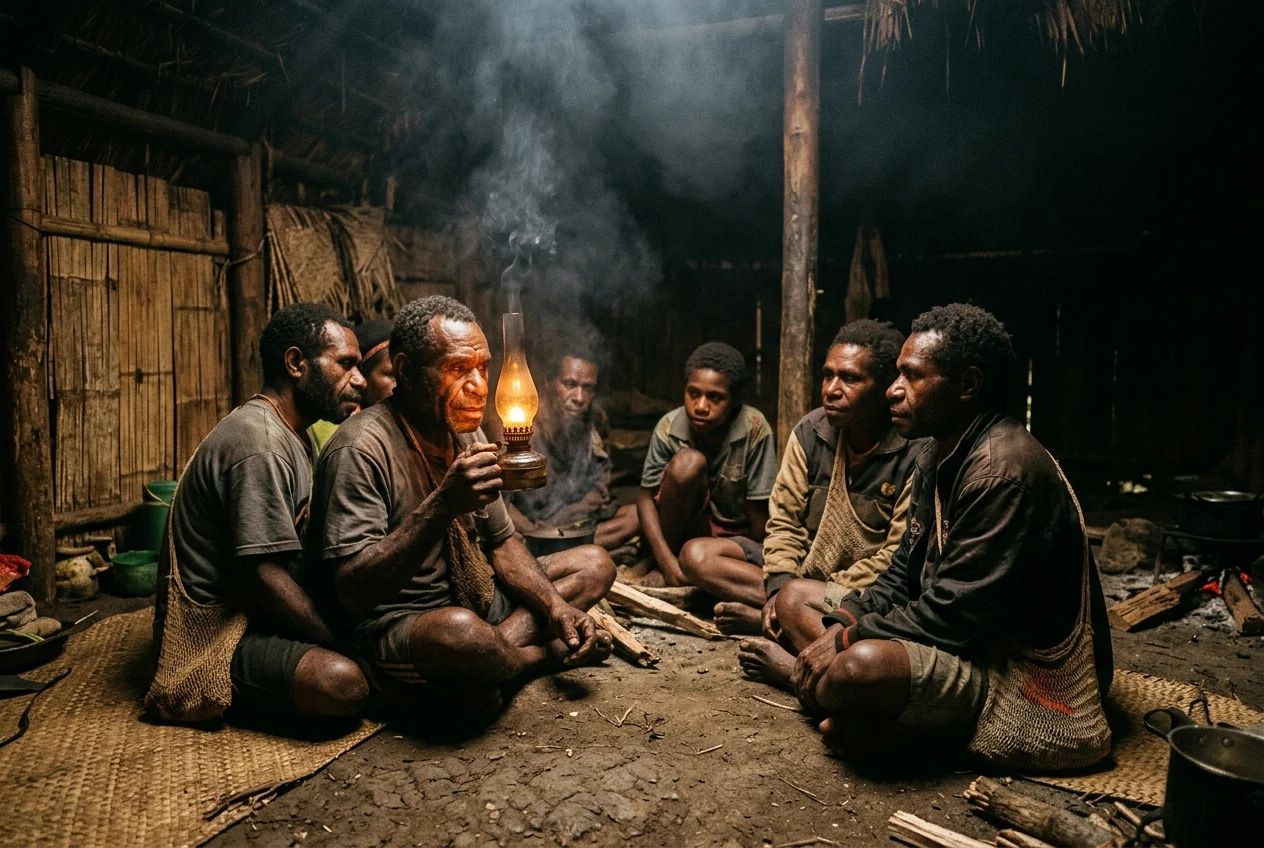
Kerosene lamps work, but they come with their own cost. The fumes fill a small room quickly, especially one with no windows or ventilation to speak of. People’s eyes sting. Children cough. There’s also the ever-present risk of a lamp tipping over on uneven ground, something that has started fires in homes and meeting places before. The pastor leading the meeting is often the one holding the lamp closest, breathing the most smoke, watching the flame as much as he’s watching his congregation.
None of that stops the meeting from happening. It just makes it harder than it needs to be.
Saturday: counseling a struggling family after dark
Saturday evenings are often when deeper counseling happens, when a couple or a family finally has time to sit down with their pastor about something they’ve been carrying all week. These conversations matter. They’re slow, they’re personal, and they often happen after the sun is already down because that’s when everyone is finally free.
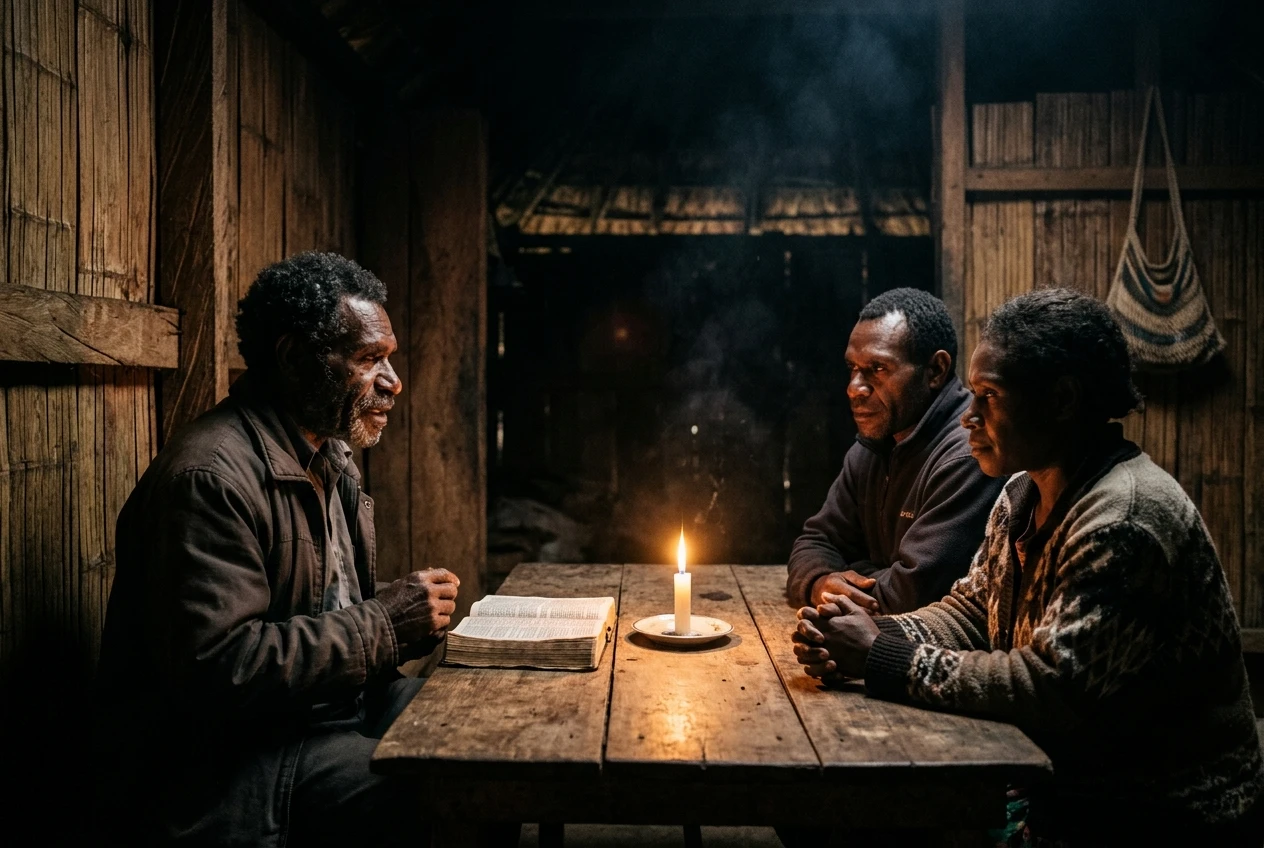
Without light, these conversations get rushed or relocated to wherever there happens to be a flame. A pastor trying to counsel a grieving widow or a couple in conflict shouldn’t have to do it squinting across a dim room, half-watching a candle burn down while trying to listen well. But that’s often exactly the setting these conversations take place in.
Sunday morning: arriving tired from a week of squinting and smoke
By the time Sunday morning comes, the pastor has spent a week working his garden by day and straining his eyes by night. His sermon was written in pieces, under poor light, often finished later than he’d have liked. His own sleep has likely been shorter than it should be, since kerosene smoke and dim light make it harder to wind down.
He stands up to preach carrying all of that. Not because he lacks conviction or isn’t ready to serve, but because the week itself has worn down the conditions he needed to prepare well. The congregation gets his faithfulness. What they don’t always get is his best, simply because his best was never given a fair chance against the dark.
What changes when the lamp arrives: the same week, re-lived
Now picture the same week with one solar lamp in the house.
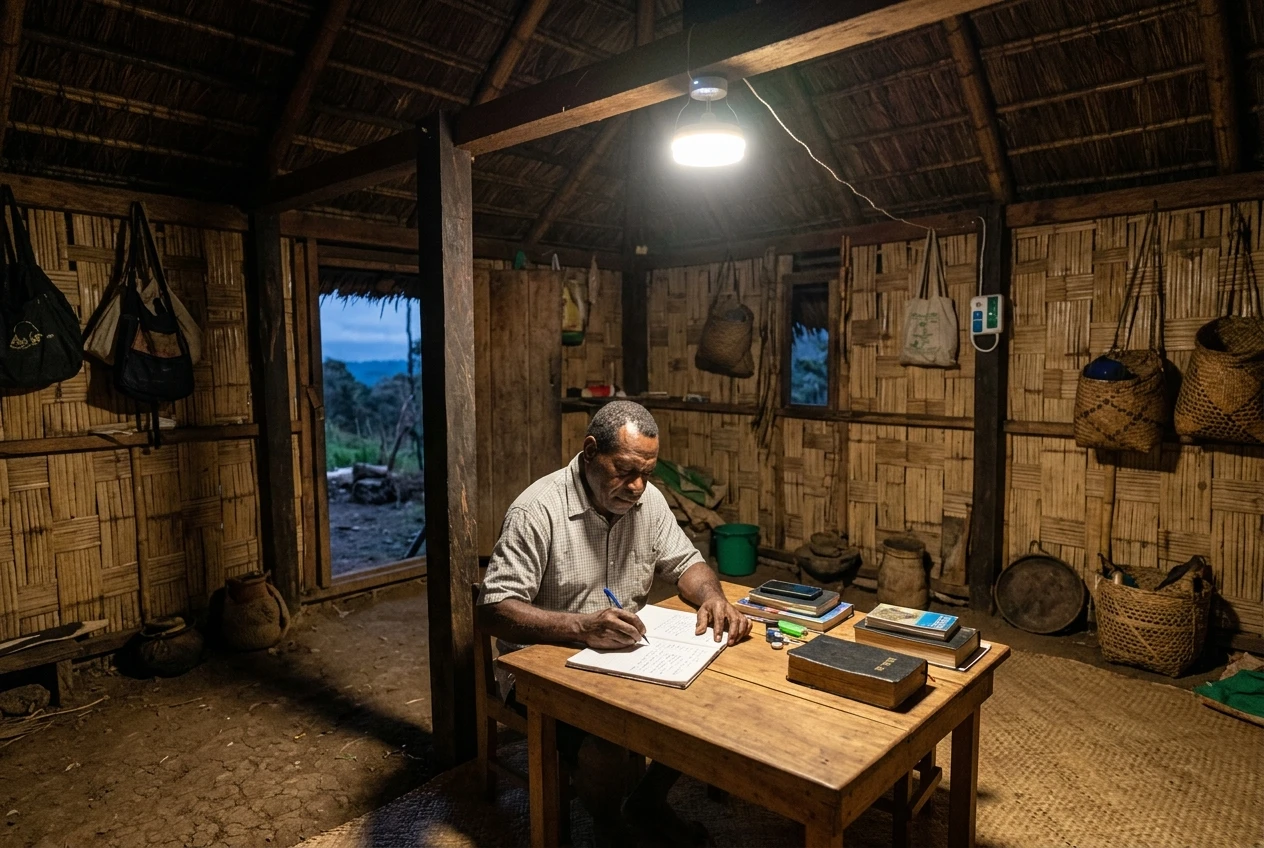
Monday night, sermon prep happens under a steady, bright light that doesn’t flicker or smoke. An hour stays an hour. Tuesday and Wednesday, home visits can run until the conversation is actually finished, because the lamp lights the walk home afterward. Wednesday’s prayer meeting is lit without fumes, without the fire risk of an open flame, and without anyone’s eyes stinging by the end of it.
Saturday’s counseling conversation gets the time it needs, held in a room that’s actually lit well enough to read Scripture together if that’s part of what the moment calls for. And Sunday morning, the pastor stands up having slept better, prepared more fully, and carried less physical strain through the week leading up to it.
It’s the same farming, the same walking, the same responsibilities. What changes is that the hours after sunset stop being a daily obstacle and start being usable time again. That’s really what one solar lamp does: it gives back the hours that darkness used to take.
For a closer look at what those pre-lamp evenings actually look like, What Evening Really Looks Like for a Highlands Pastor in PNG walks through it in more detail.
Why this is a week worth multiplying across Simbu and Jiwaka
This week isn’t unusual. It’s the normal rhythm for a great many pastors and church workers serving rural congregations across the Highlands, almost all of them bi-vocational, almost all of them without any reliable light once the sun goes down.
One lamp changes one week for one pastor. But the same week, with the same gaps and the same strain, is being lived right now by his counterparts in the next valley, the next ridge, the next district over. Multiplying this change means multiplying the hours given back to sermon preparation, to pastoral visits, to prayer meetings, to counseling, and to the kind of rest a pastor needs to serve well on Sunday.
That’s the heart of what LIGHT PNG exists to do: get a solar lamp into the hands of a pastor who’s been making ministry work in spite of the dark, so he can keep doing the same faithful work without the same nightly cost.
If this week sounds familiar to the pastors you know, or you want to help put a lamp into the hands of one like him, visit /get-involve/ to see how.
Frequently Asked Questions
Why do rural pastors in Papua New Guinea need solar lights?
Most rural pastors in the Papua New Guinea Highlands are bi-vocational, spending their days farming, carrying firewood, or working a market stall, which means ministry work — sermon prep, home visits, prayer meetings — only happens after dark. Without electricity, the only light available is firelight or kerosene, both too dim, smoky, or unsafe to work by for long. A solar lamp restores those evening hours as genuinely usable time.
What challenges do bi-vocational pastors in the PNG Highlands face without electricity?
Without reliable light, pastors struggle to prepare sermons, conduct home visits, and lead evening prayer meetings safely. Kerosene lamps produce fumes that irritate eyes and lungs and carry a real fire risk on uneven village floors, while firelight is too weak and inconsistent to read Scripture by for more than a few minutes at a time.
How does a solar lamp change a pastor’s weekly ministry schedule?
A solar lamp turns the hours after sunset from an obstacle back into usable ministry time. Sermon preparation can take a full, focused hour instead of fragments squinted out by firelight. Home visits can run until a conversation is actually finished, instead of being cut short to beat the dark on the walk home.
How does kerosene lighting affect pastors and their families during evening gatherings?
Kerosene lamps fill small, unventilated rooms with fumes quickly, causing stinging eyes and coughing, especially among children. They also carry a tipping and fire risk on uneven ground. During prayer meetings, the pastor often sits closest to the lamp, absorbing the most smoke while trying to lead the gathering.
What ministry activities benefit most from reliable evening light?
Sermon preparation, pastoral home visits, midweek prayer meetings, and personal counseling sessions all depend on usable evening light, since these activities typically happen after farm work ends and the sun has already set. Reliable lighting allows each of these to happen fully, safely, and without being rushed.
What is LIGHT PNG and what does it do?
LIGHT PNG is a mission initiative that provides solar lamps, free of charge, to pastors, evangelists, and church workers serving rural congregations across the Papua New Guinea Highlands. The goal is to remove the nightly burden of inadequate lighting so pastors can prepare, counsel, and lead ministry without the strain darkness has forced on them for years.
Is LIGHT PNG’s solar lamp distribution free for pastors?
Yes. Every solar lamp distributed through LIGHT PNG is provided at no cost to the pastor, evangelist, or church worker who receives it, funded through donor and partner support rather than any payment from the recipient.
Where does LIGHT PNG currently provide solar lamps?
LIGHT PNG’s current outreach focuses on rural congregations across Simbu and Jiwaka Provinces in the Papua New Guinea Highlands, with plans to expand into additional districts as the project grows.
How does better lighting affect a pastor’s Sunday preaching?
A pastor who has spent the week squinting through sermon prep and losing sleep to kerosene smoke often arrives Sunday worn down before he even begins. Reliable evening light means sermons are prepared more fully, sleep is less disrupted, and the pastor can bring his best effort to the pulpit, not just whatever survived the week.
How can I help provide a solar lamp to a pastor in rural Papua New Guinea?
You can support LIGHT PNG’s work by visiting the Get Involved page to sponsor or fund a solar lamp for a pastor currently serving without reliable light. Every lamp given restores a full week’s worth of evening hours to sermon preparation, pastoral care, and rest.