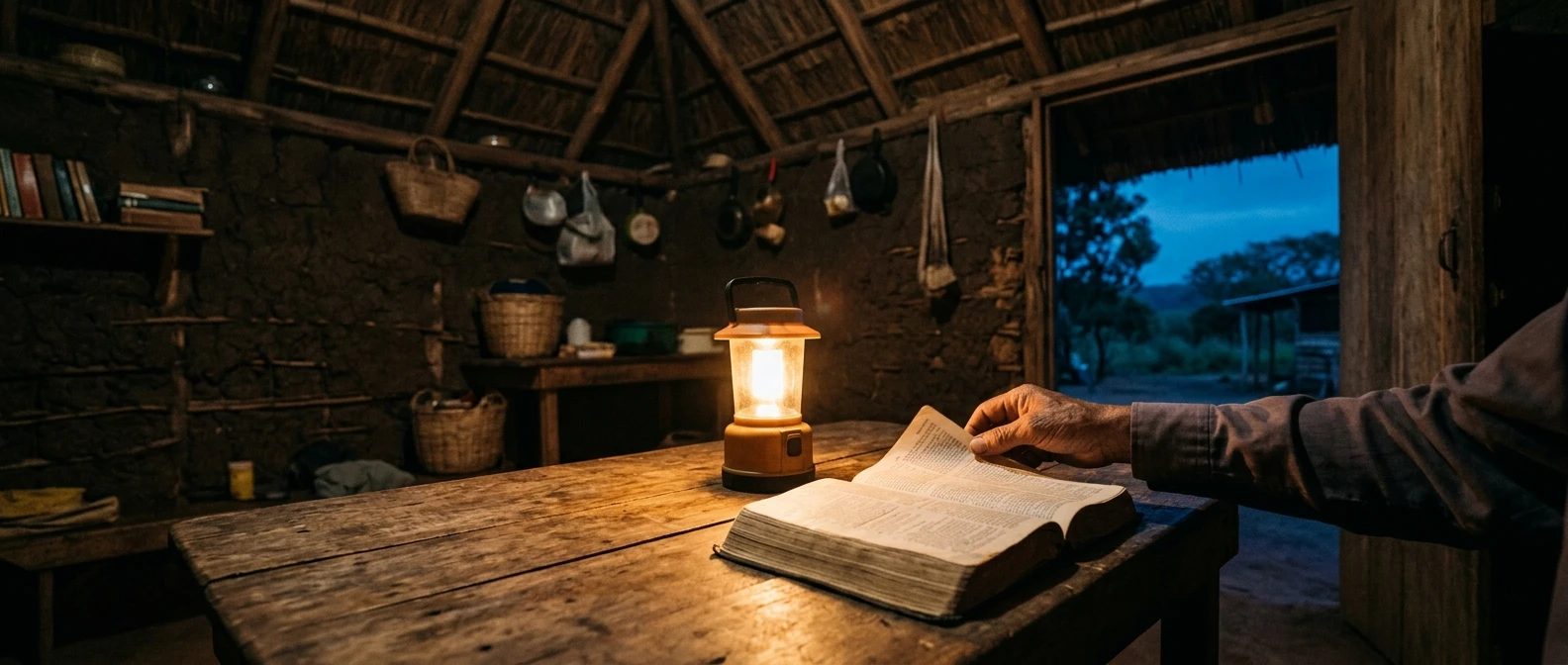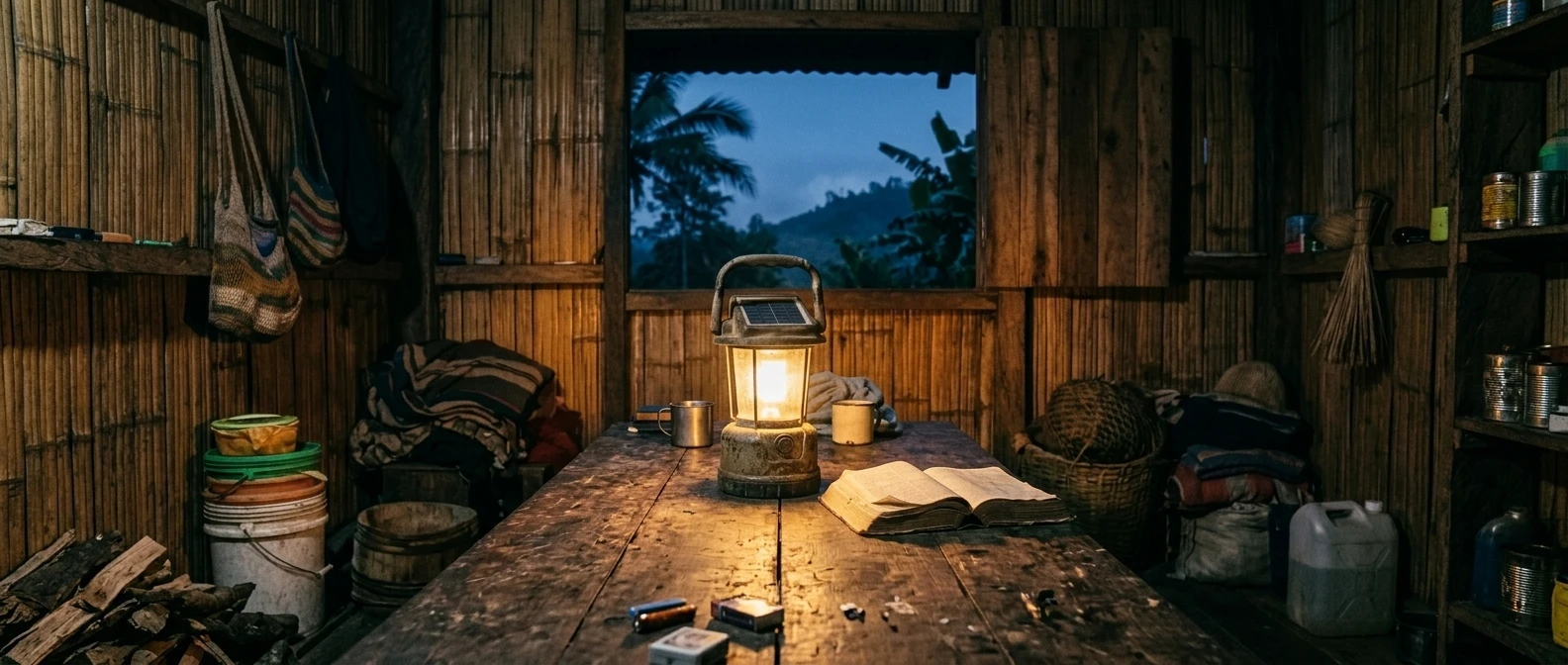

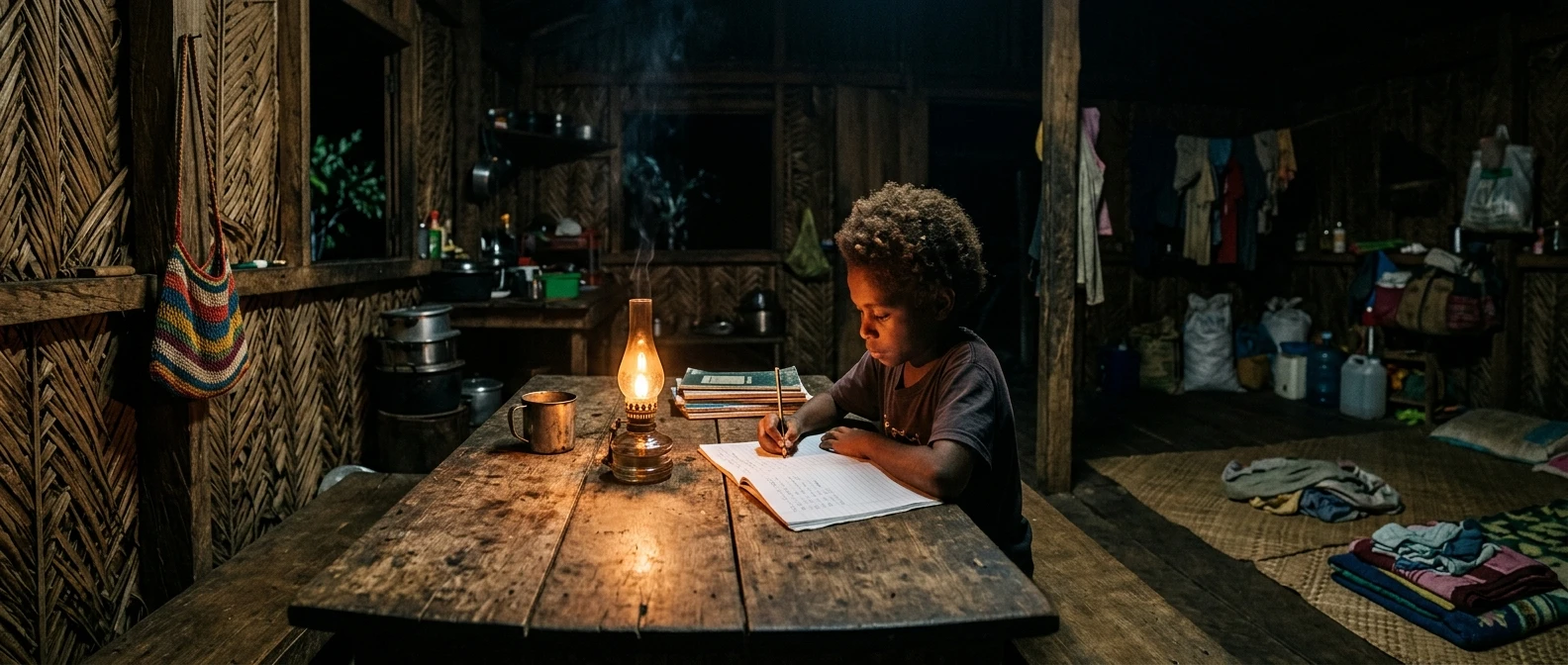
When the sun goes down in a rural village, a pastor isn’t the only one still working by whatever light the household has. In the same homes, children are pulling out exercise books, trying to finish homework or study for a test the next morning, often by the same kerosene lamp or candle stub the whole family shares. Most of what gets written and shared about solar light in these communities speaks to the pastors and church workers carrying ministry into the night. This one is for the students sitting at the same table.
What a Study Lamp Needs to Do That a Room Lamp Doesn’t
A lamp that lights a room well enough for people to talk, cook, or find their way to bed doesn’t automatically light a page well enough for a child to read small print or copy figures without strain. Studying puts different demands on a lamp than gathering does. The light needs to fall steadily on one spot, close and bright enough to read by for an hour or more without flickering or dimming halfway through a chapter. A lamp that’s fine for a prayer meeting, where people are listening more than reading, can leave a student squinting by page three.
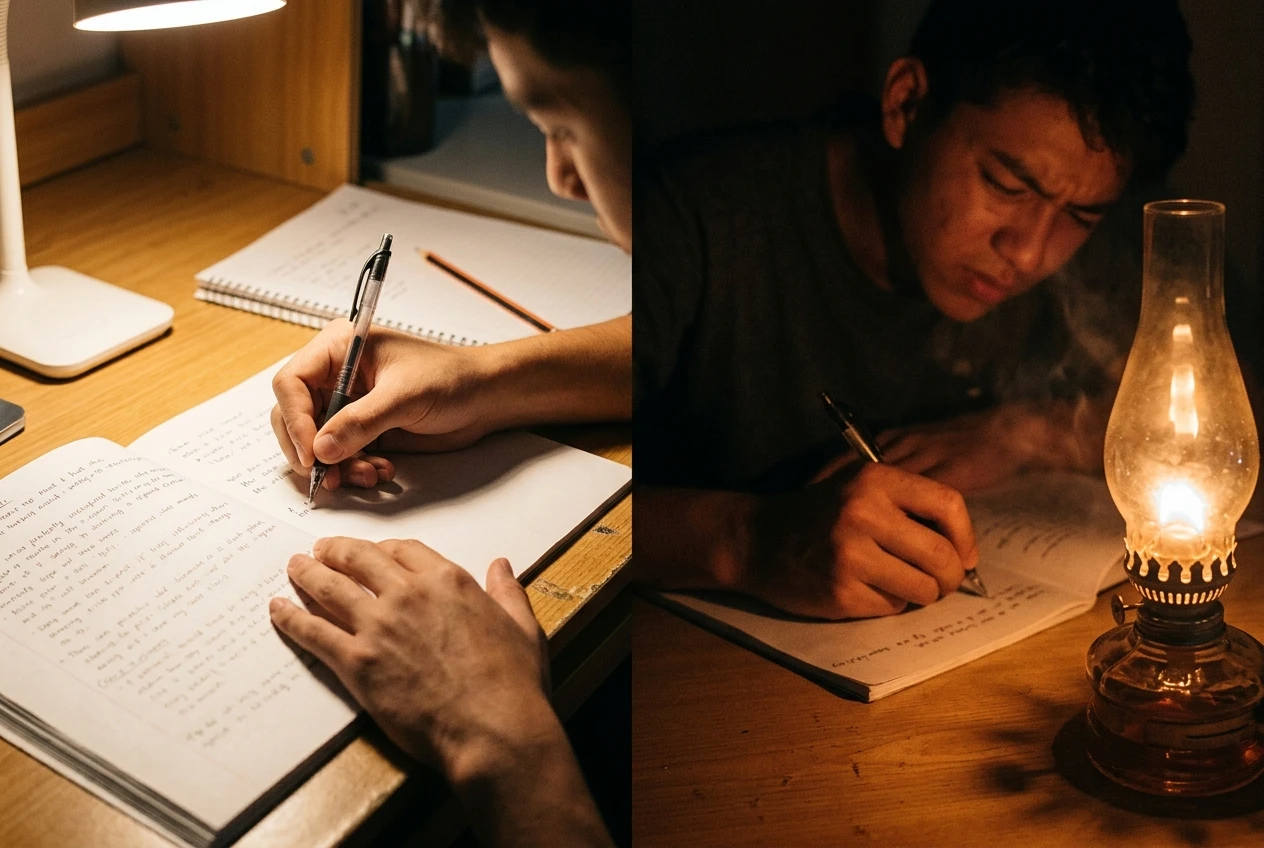
This matters because eyes working this hard, night after night, either get help or get tired. A lamp bright enough and steady enough for real reading protects a child’s eyesight along with their grades.
Matching the Lamp to How the Student Actually Studies
Not every lamp suits every kind of studying. A student copying notes from a textbook needs a wide, even spread of light across the page. A student doing arithmetic or reading small print in an exercise book benefits from a more focused, adjustable beam they can bring closer without casting their own hand’s shadow over the work. Some lamps let you angle the head or stand them upright on a table; others are built to hang or sit flat, which works for a room but awkwardly for a desk.
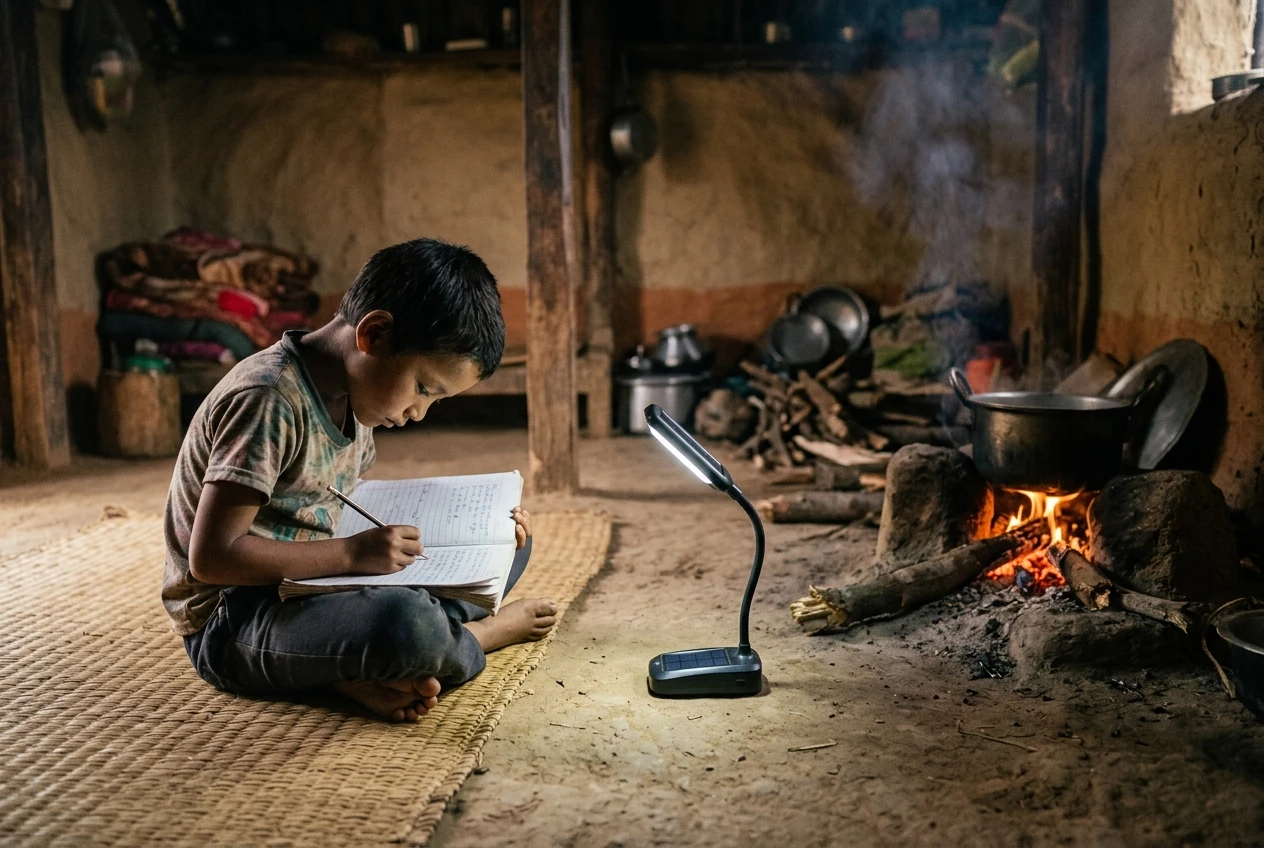
Before assuming a lamp will serve a studying child, it’s worth watching how the child actually studies. Do they read lying down, sitting at a table, or balancing a book on their knees by the cooking fire? The lamp that fits that posture will get more real study hours out of a single charge than one chosen for brightness alone.
Sharing One Lamp Between Siblings Without Losing Study Time
In most households with one lamp and several children, somebody is always waiting their turn. A lamp with a longer runtime on a single charge, or one that can be set to a lower brightness for a sibling doing lighter reading while another works on something harder, stretches the light further across the family rather than forcing a choice between whose homework gets done.
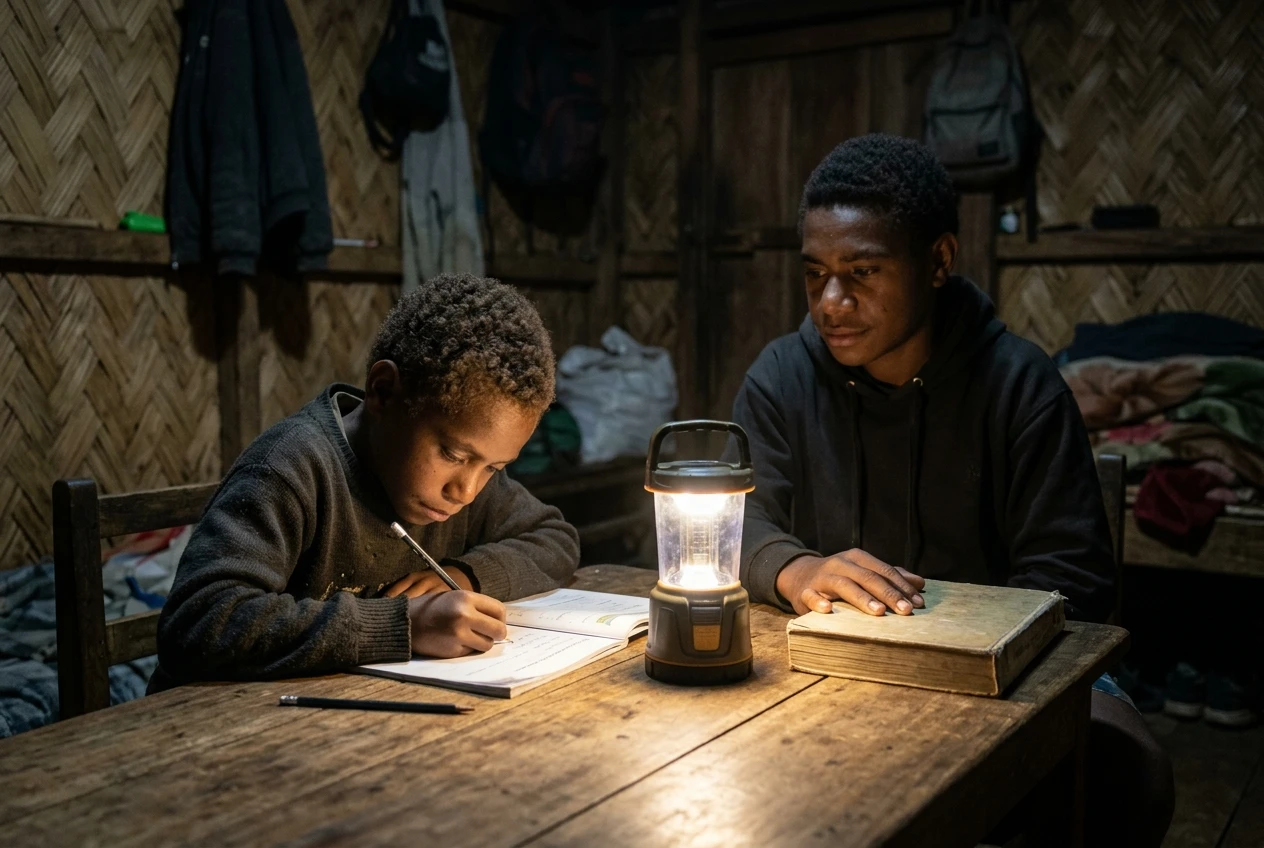
Families managing this well often set a simple order: younger children with shorter homework first, older students with exams or harder subjects later, once supper’s cleared and the lamp has had its longest stretch of daylight charge. It isn’t a perfect system, but it beats one child finishing in the dark.
Getting the Most Light for the Least Battery
A lamp only lights as well at nine at night as the sun let it charge that afternoon. Getting the panel angled toward the sun and left out for the fullest part of the day makes a real difference to how much light is left for the hours that matter most, after the evening meal, when the books actually come out. There’s a fuller guide to getting this part right, covering how to position a solar panel for the strongest charge through the day, which is worth reading alongside this one.
Keeping the Lamp Ready for Tomorrow Night
A lamp that studies well tonight only keeps doing it if the battery inside is cared for. Letting it run flat too often, or leaving it in the sun longer than it needs once it’s full, wears a battery down faster than the lamp’s housing ever will. Simple habits, charging fully during the day and not over-discharging it at night, keep a lamp serving a student’s whole school year instead of fading by the middle of a term. There’s a separate piece on how to make a solar lantern battery last for years rather than months, which covers this in more detail.
Where This Fits Into LIGHT PNG’s Wider Work With Families
LIGHT PNG started with pastors preaching and discipling by kerosene light, and that’s still the center of the work. But a pastor’s household is also a family’s household, and in the same room where a sermon gets prepared, a child is often doing homework by the same flame. Reaching a family with reliable light reaches both.
If your family or congregation includes students studying by candlelight or kerosene, reach out through the Get Involve page to tell LIGHT PNG about your situation and see how a lamp might reach your household.