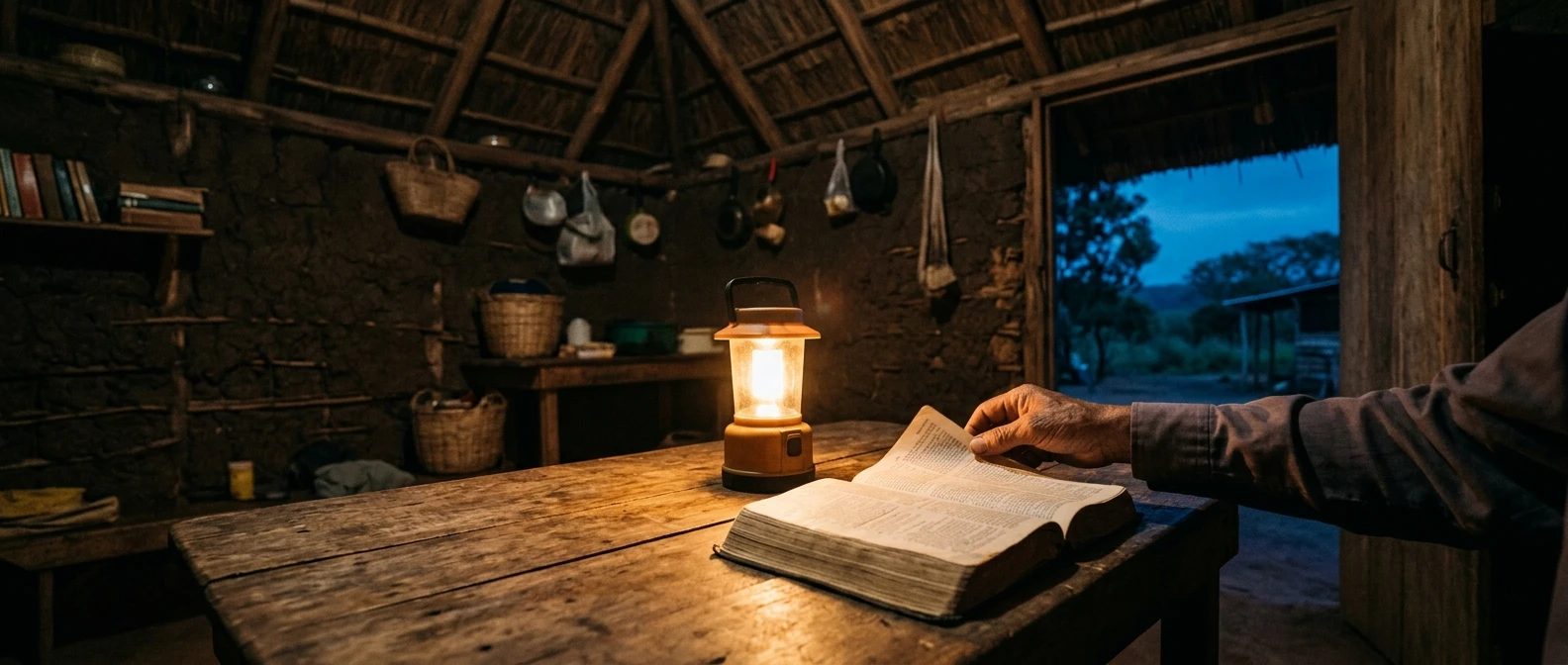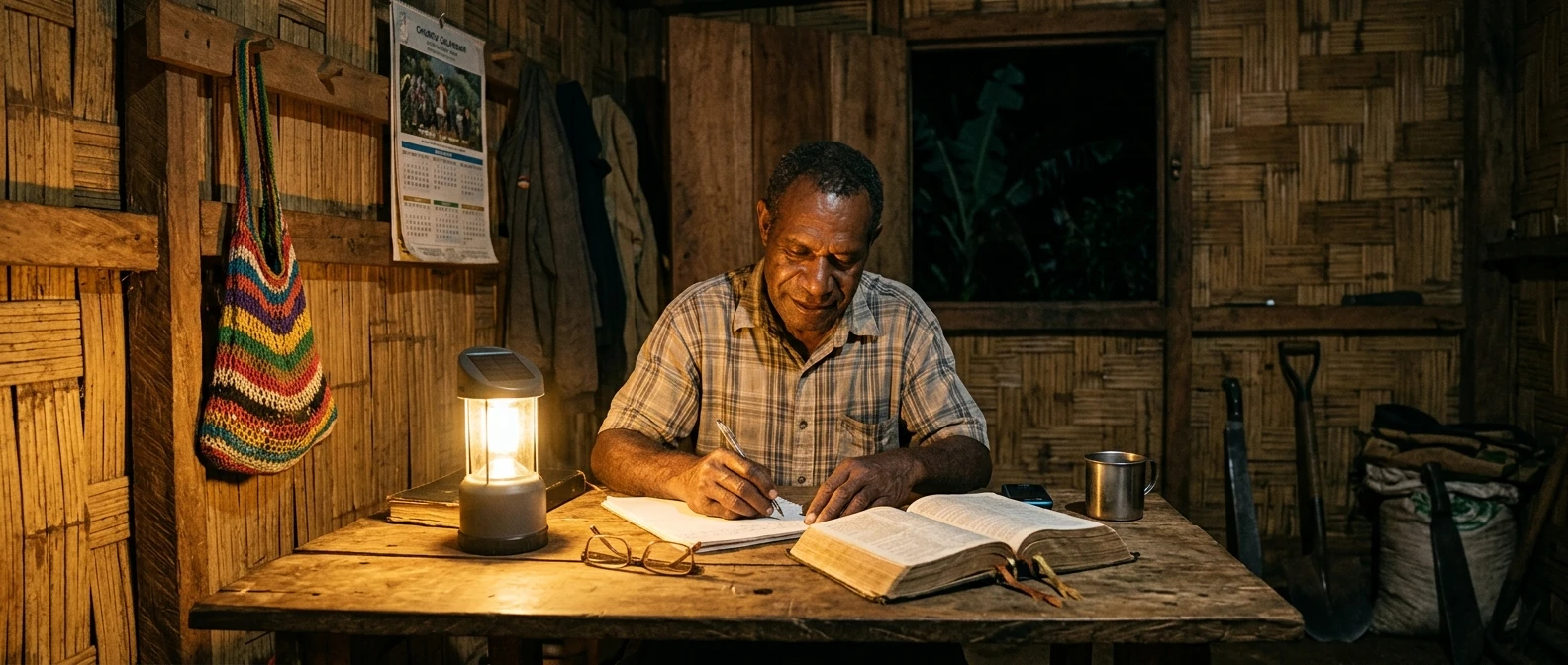

A solar lamp can be well-made, well-cared-for, and still come home half-charged every evening. Most of the time, the lamp isn’t the problem. Where it sat during the day is.
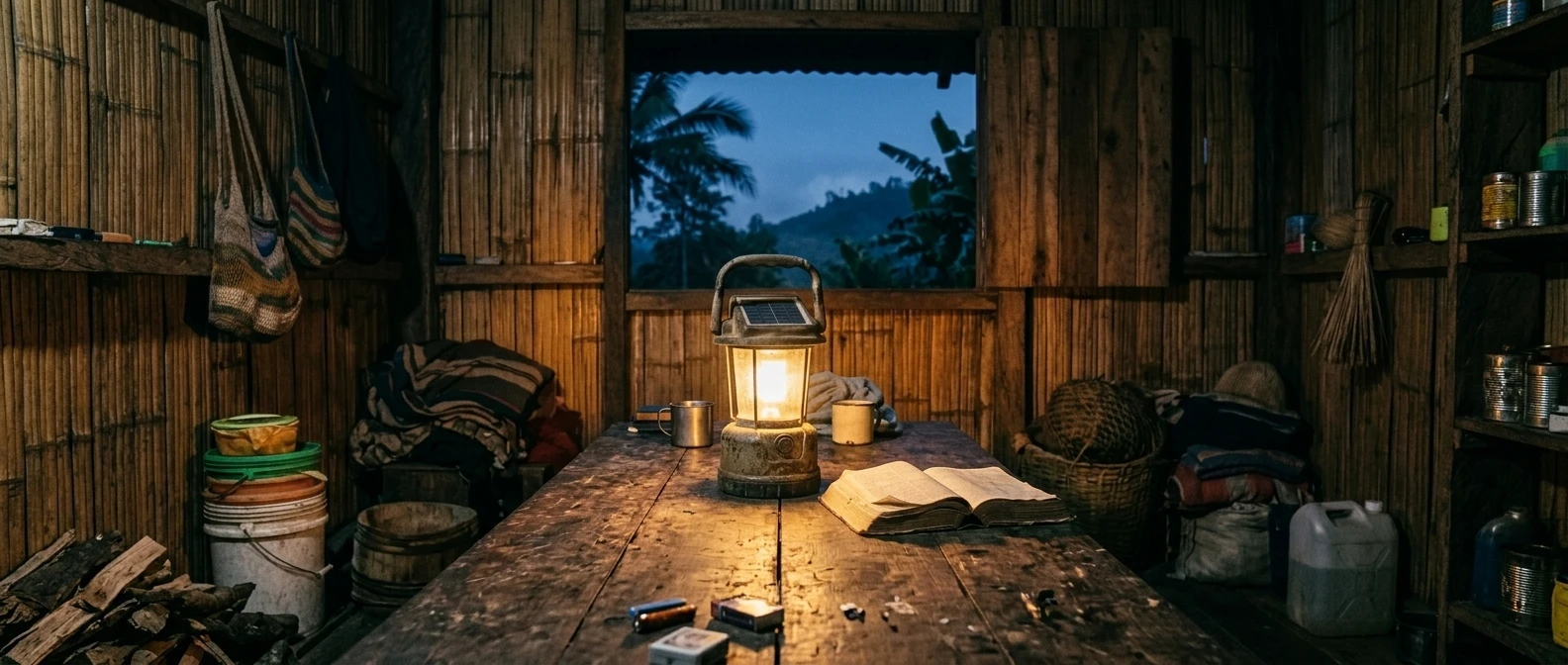
Why placement matters more than the panel itself
Two identical lamps can end the day in very different conditions depending on nothing but where their panels spent the afternoon. A panel in full, direct sun for five or six hours will outcharge the same panel sitting in dappled shade for ten. The difference isn’t the hardware. It’s the angle, the hours, and what stood between the panel and the sky.
For a pastor or church worker relying on that lamp for an evening Bible study or a walk home after dark, this matters more than any feature on the box. A few minutes spent thinking about placement in the morning is worth more than anything printed on the lamp itself.
Reading the sun in mountain country: Kerowagi and Dawo’s tricky angles
In the highlands around Kerowagi and Dawo, the sun doesn’t travel the same simple arc it would over flat, open ground. Ridgelines and valley walls block the early morning and late afternoon sun, which shortens the real charging window even on a clear day. A spot that looks sunny at midday might only get four honest hours of direct light once the hills are accounted for.
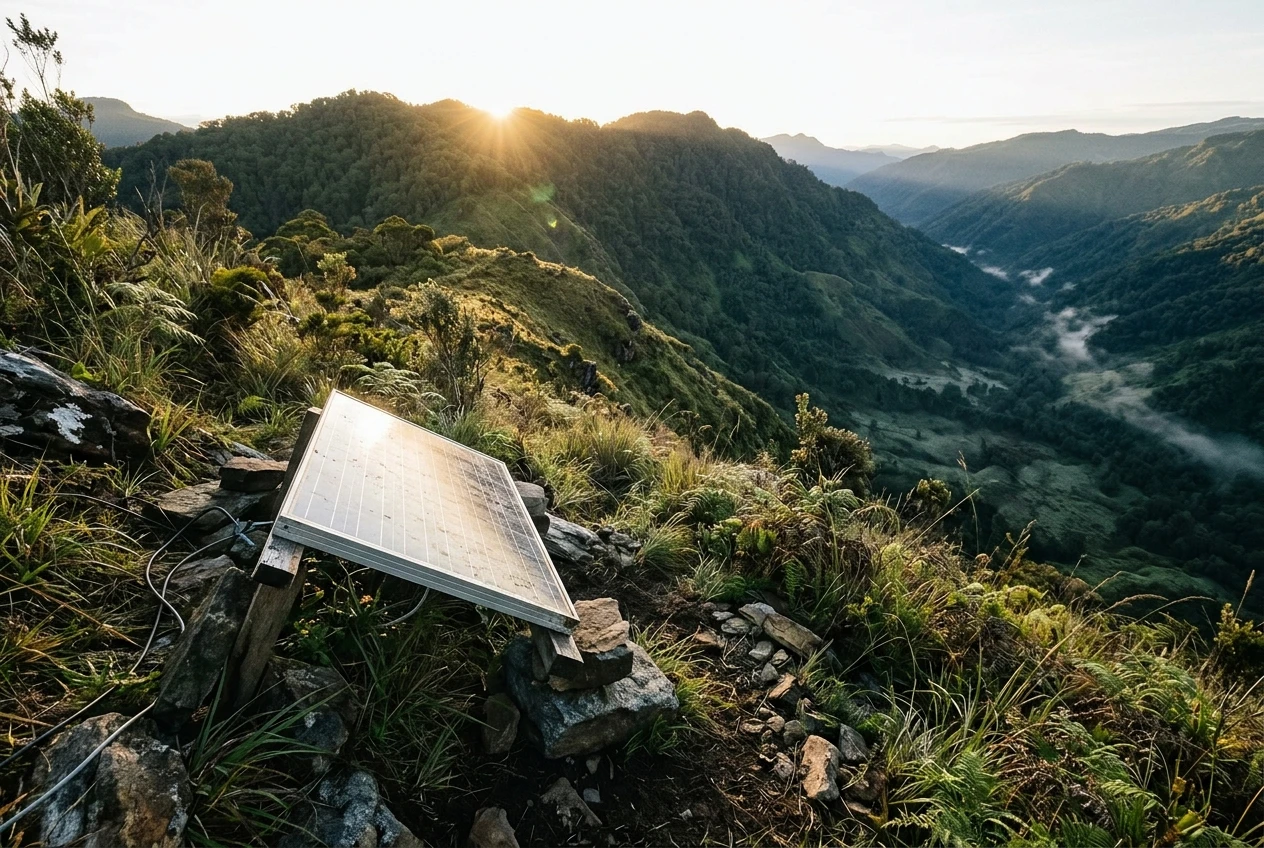
The way around this is to watch where the sun actually clears the ridge each morning rather than guessing by the clock. A panel placed where the sun appears earliest, even if it’s not the most convenient spot near the house, will usually out-earn a panel placed somewhere flatter but shadowed longer by the terrain.
Morning sun or afternoon sun: which one to chase
Where there’s a choice, morning sun is usually the better one to chase. Mountain weather in Simbu and Jiwaka tends to build cloud cover as the day goes on, so a clear morning often gives way to an overcast or rainy afternoon. A panel that’s already caught several hours of strong, early light has banked most of its charge before the clouds roll in.
This doesn’t mean afternoon sun should be ignored. If morning shade is unavoidable because of a ridge or a building, afternoon placement is still far better than no direct sun at all. The point is simply to give the panel priority access to whichever window is more reliable, and in highland country, that’s usually the morning hours.
Shade you might not notice: trees, roofs, and haus win walls
Shade doesn’t always look like shade. A panel sitting a few feet from a haus win wall, under the edge of a roofline, or near a tree that looks bare can still lose an hour or two of charging to a shadow that creeps across it slowly through the day. These partial shadows are easy to miss because the panel still looks like it’s in the sun when you check on it once.
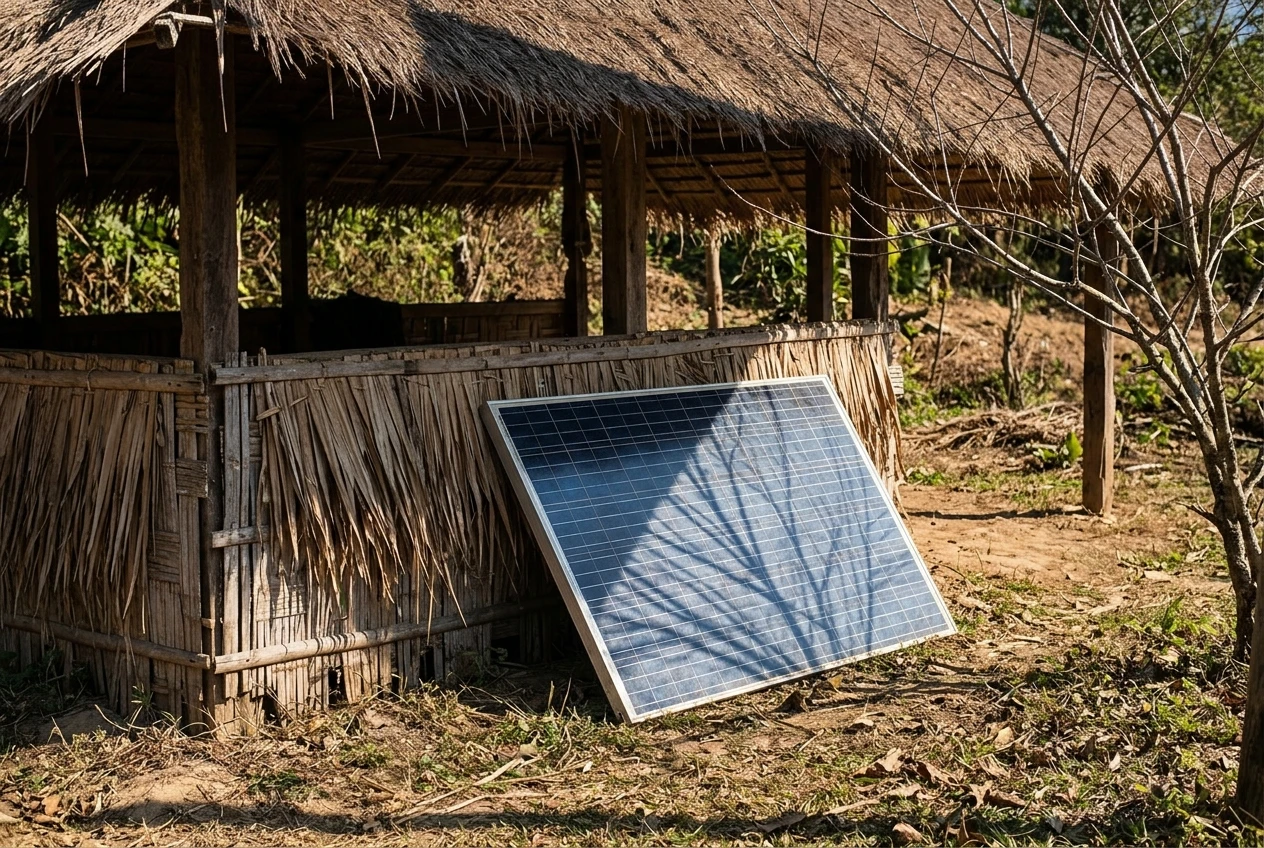
Walking past the panel two or three times during the day, rather than setting it down and forgetting it, catches this kind of creeping shade before it costs a full evening’s light. Moving it even a meter or two away from a wall or overhang often makes a noticeable difference.
Angling the panel right when you have no mount or stand
Not every household has a proper stand or bracket, and the panel still needs an angle facing the sun rather than lying flat on the ground. Propping it against a rock, a stick, a bench, or the side of a bilum bag works fine as long as the face of the panel points toward where the sun is sitting in the sky, not straight up. A flat panel on the ground catches the sun directly for only a short part of the day; a tilted one holds a better angle for longer.
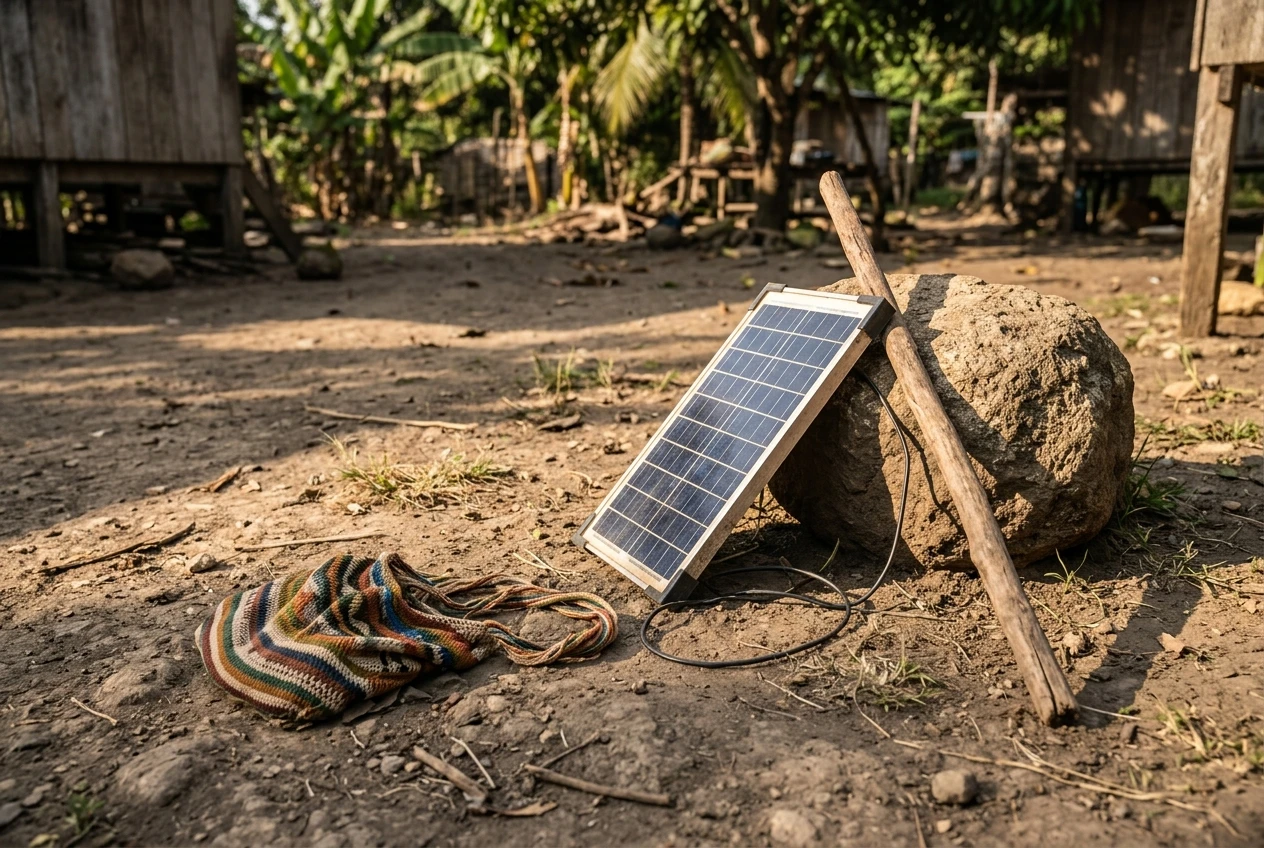
The simplest approach is to tilt the panel so it’s roughly facing the sun the way a person would face it if they were trying to get warm. It doesn’t need to be exact. Close is close enough.
Getting a charge during the wet season months
During the wet season, direct sun can be scarce for days at a time, but solar panels still draw some charge from bright overcast sky, just far less than from direct sunlight. On cloudy days, the best move is to place the panel in the most open spot available, away from overhangs and tree cover, so it’s catching as much of the available light as possible rather than sheltering with it.
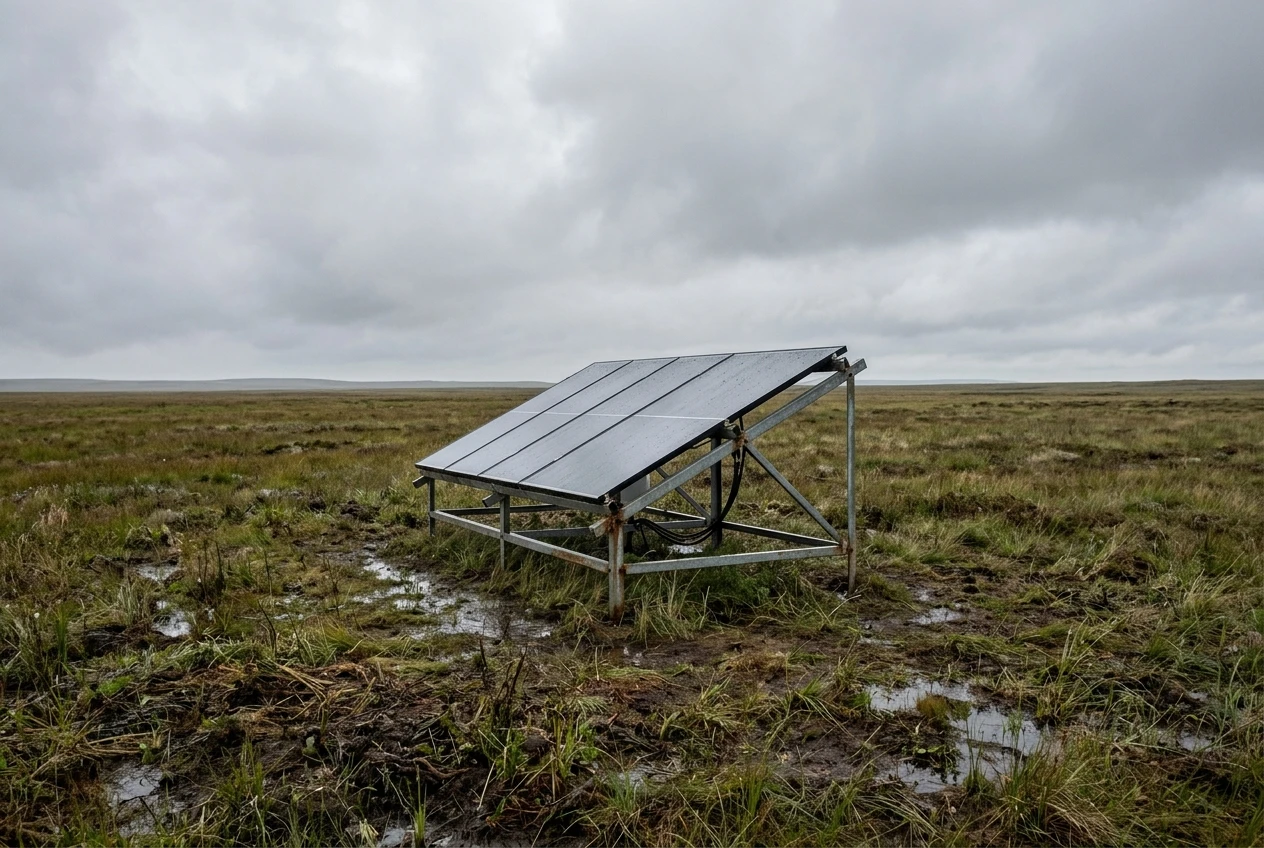
It also helps to put the panel out as early as possible and leave it out as late as the light allows, since a weak charge over many hours can add up to something usable even when a strong, direct charge isn’t on offer that day.
A simple habit: moving the panel twice a day
A habit worth building into the day is moving the panel once around midmorning and once around midafternoon, shifting it to follow the sun rather than leaving it fixed in one spot from sunrise to sunset. This small adjustment, done twice a day, often captures far more charge than a panel left in a single position, even a good one, for the whole day.
It doesn’t take long, and it doesn’t require any tools or equipment. It just asks for a little attention, the same kind of steady faithfulness already at work in the evening Bible study the lamp is there to light.
If your lamp is charging well but the battery still isn’t lasting as long as it should, read How to Maintain Solar Lantern Battery Last for Years next.
Frequently Asked Questions
Why isn’t my solar lamp fully charged even though it was in the sun all day?
In most cases, it’s not the lamp — it’s where the panel spent the day. Even a few hours of partial shade from a ridge, roofline, or wall can cut a panel’s real charging time significantly, even on a day that looked sunny. Checking the panel’s position once in the morning and once in the afternoon usually makes a bigger difference than anything about the lamp itself.
Does panel placement really matter more than the lamp’s quality?
Yes. Two identical lamps can end the day with very different charge levels depending only on where their panels sat — five to six hours of direct sun will outcharge ten hours in dappled shade. Placement, angle, and what’s blocking the sky matter more than any feature built into the lamp.
What’s the best time of day to charge a solar lamp in the Highlands?
Morning sun is usually the more reliable window in highland areas like Kerowagi and Dawo, since cloud cover tends to build through the afternoon. A panel that catches several hours of strong early light has often banked most of its charge before clouds roll in later in the day.
Why does solar charging behave differently in mountain areas like Kerowagi and Dawo?
Ridgelines and valley walls block the early morning and late afternoon sun, shortening the real charging window even on clear days. A spot that looks sunny at midday may only get a few honest hours of direct light once the surrounding terrain is accounted for — so watching where the sun actually clears the ridge matters more than guessing by the clock.
How do I know if my solar panel is sitting in hidden shade?
Shade isn’t always obvious. A panel near a haus win wall, under a roof edge, or close to a tree can lose an hour or two of charging to a shadow that creeps across it slowly through the day — even though it looks sunny at a glance. Checking on the panel two or three times during the day catches this kind of shade before it costs an evening’s light.
How do I angle a solar panel properly if I don’t have a stand?
Prop the panel against a rock, stick, bench, or similar support so its face points toward the sun rather than lying flat on the ground. A simple way to judge the angle: tilt it the way a person would turn to face the sun to get warm. It doesn’t need to be exact — close is close enough.
Can a solar panel still charge on a cloudy or rainy day?
Yes, though far less than in direct sunlight. On overcast days, place the panel in the most open spot available, away from trees and overhangs, and leave it out as early and as late as the light allows. A weak charge spread over many hours can still add up to something usable.
How often should I move my solar panel during the day for the best charge?
Moving it twice a day — once around mid-morning and once around mid-afternoon — to follow the sun typically captures noticeably more charge than leaving it fixed in one spot from sunrise to sunset. It takes only a few minutes and no tools.