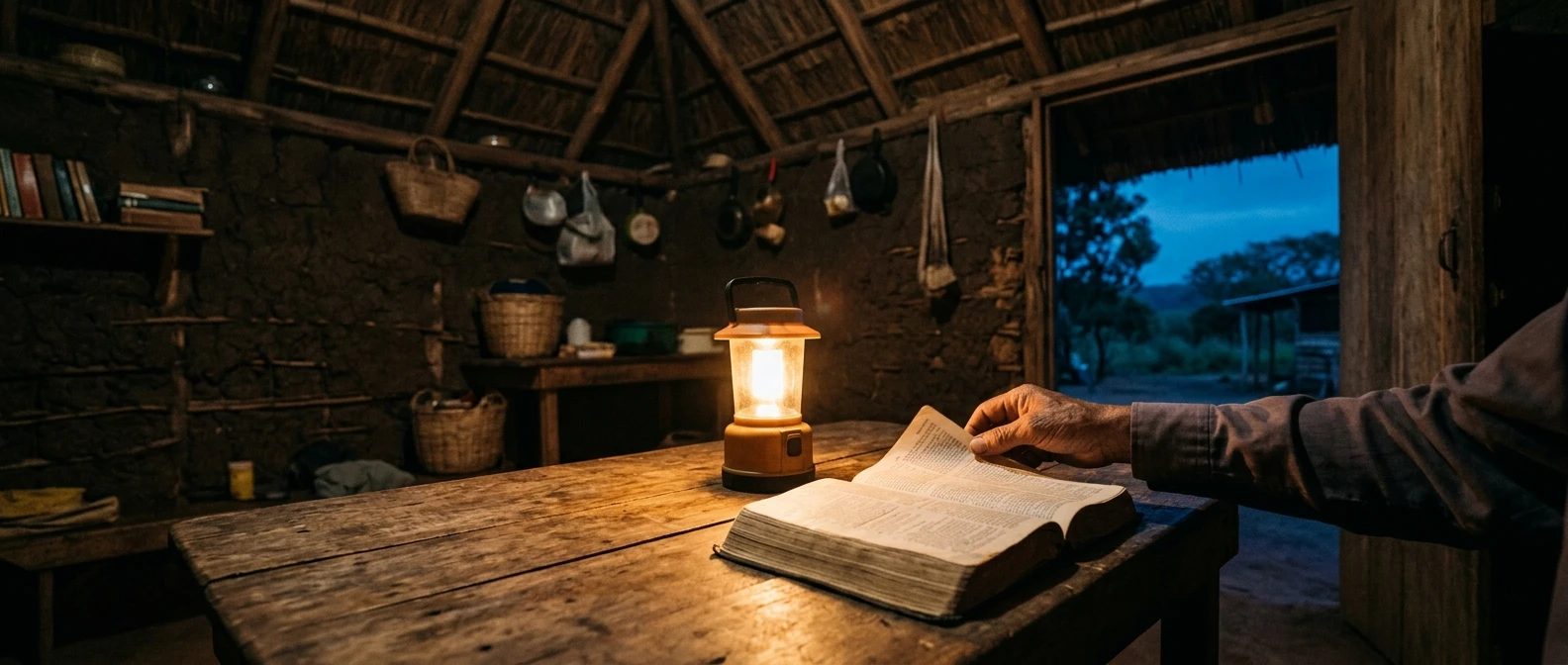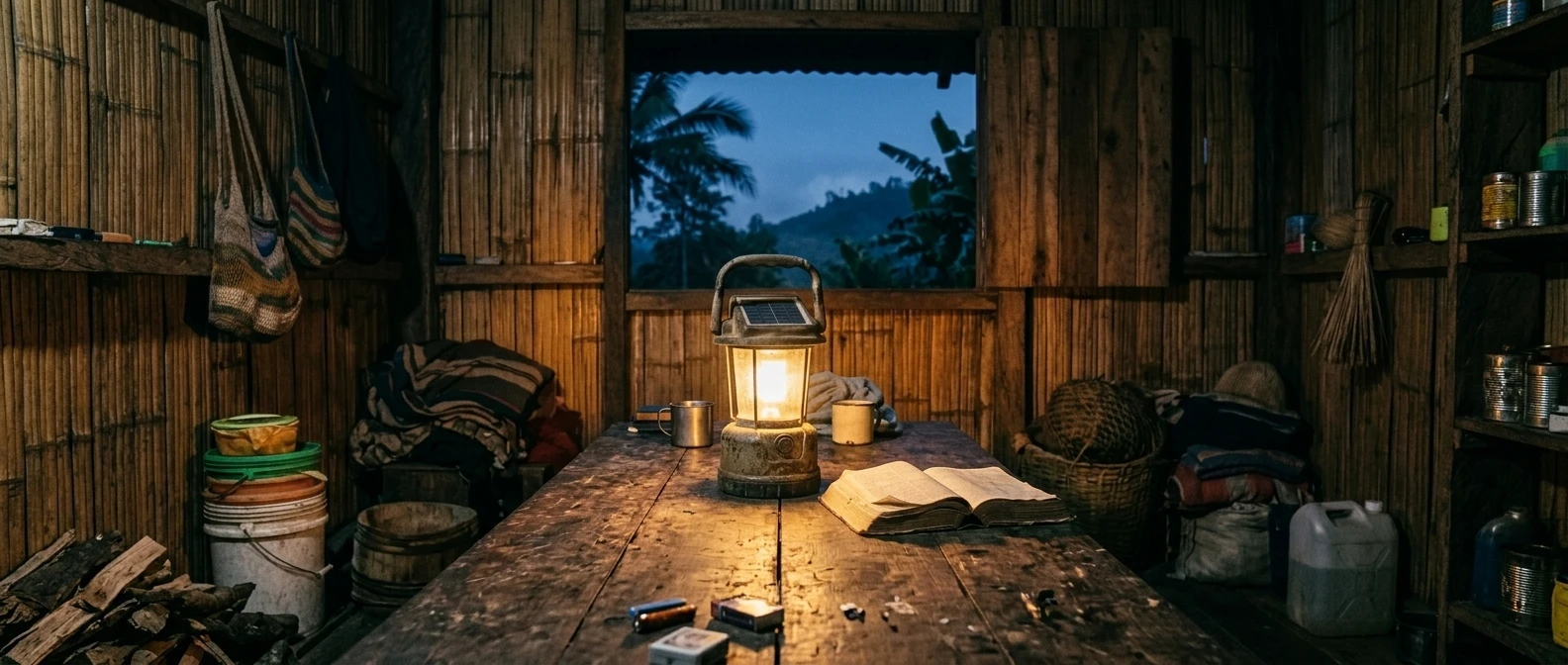

Why it is important to provide solar lights for pastors in rural Papua New Guinea. Let’s look at the scenario of a pastor’s weekly activities. A bi-vocational pastor in rural PNG highland doesn’t have a typical week. He has a garden to tend, a family to feed, and a congregation to shepherd, and all three of those jobs compete for the same hours of daylight. When the sun goes down, most of what’s left of his work used to go down with it. A solar lamp changes that math, not in one dramatic moment, but hour by hour, night after night. Here’s what one week with light can look like.
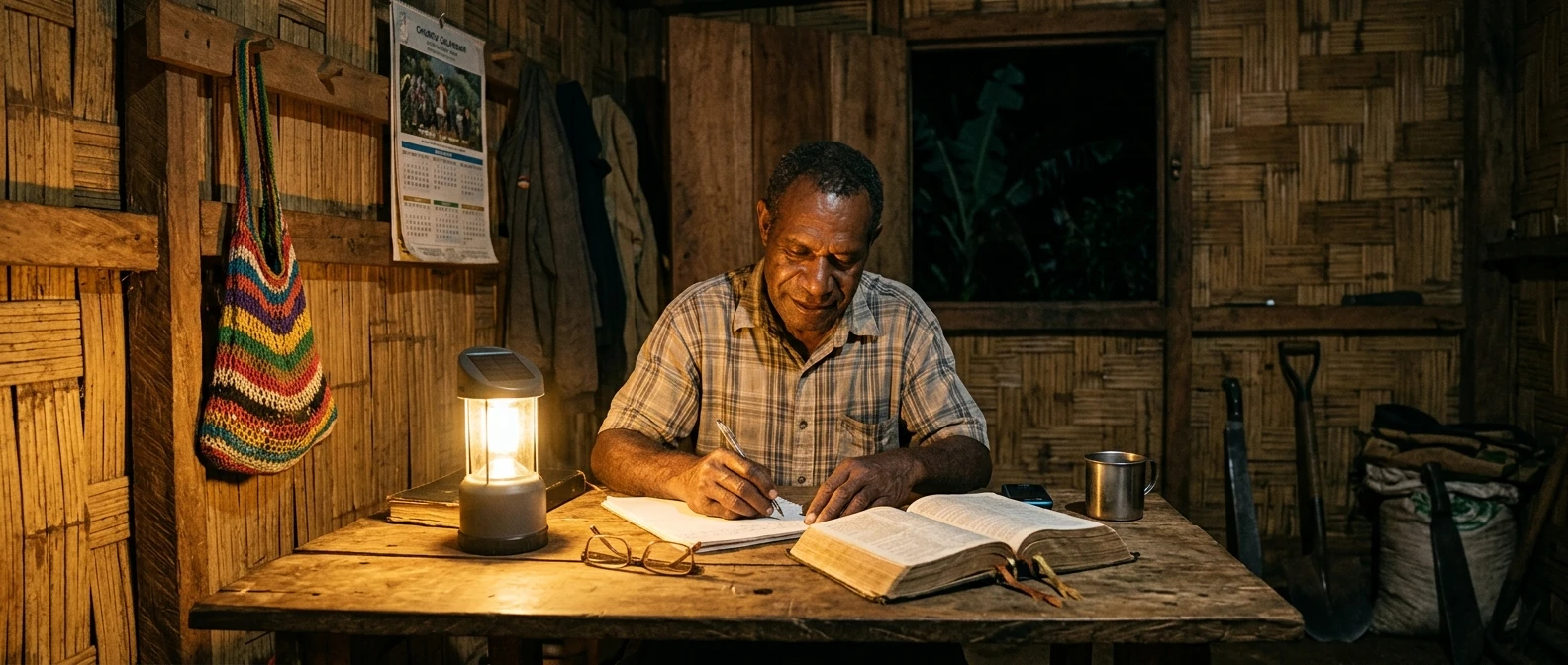
Monday night: finishing a sermon that used to end at sundown
Sermon preparation for Sunday often starts on Monday, while the week’s first thoughts on a passage are still fresh. Without light, that work stopped the moment the sky went dark, picked back up whenever it could, and sometimes got finished in a rush Saturday night. With a solar lamp on the table, a pastor can sit with his Bible and his notes for as long as the thought takes to work through. The sermon gets built across the week instead of scrambled together at the end of it.
Tuesday: walking to a sick family’s house without fearing the dark
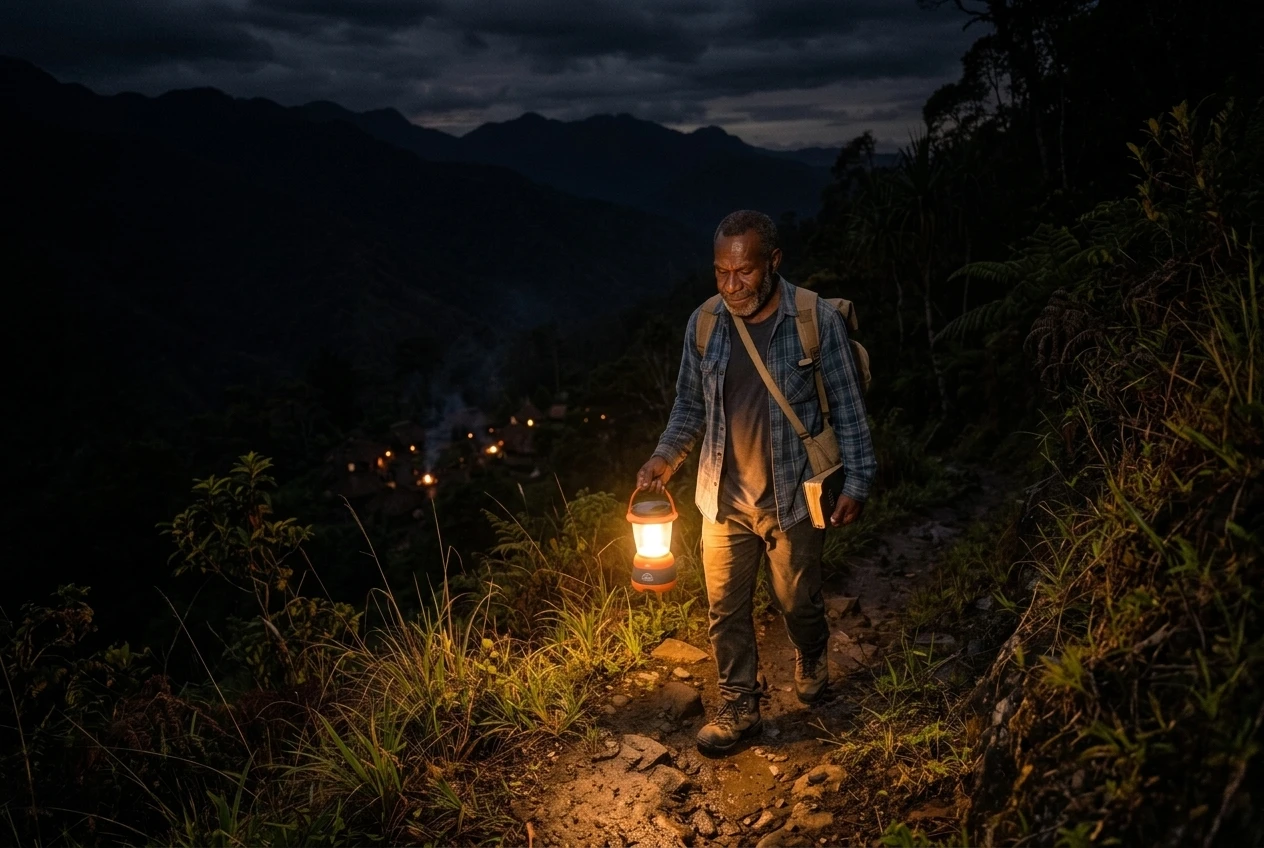
Pastoral visits don’t wait for daylight. Sickness and need show up when they show up, and in rural Simbu that sometimes means a walk to a neighboring hamlet after dark, over ground with no streetlights and no clear path. A lamp strapped to a hand or a bag turns that walk from something risky into something ordinary. The visit still matters the same amount. It just doesn’t come with the added weight of walking blind.
Wednesday: a discipleship group that no longer stops at dusk
A discipleship group meeting at someone’s house used to have a hard stop built in: whenever the light ran out, the conversation ran out with it. Questions that needed more time got cut short. With a lamp hanging in the room, the group can finish the passage, finish the conversation, finish praying for whoever needed it that night. The teaching doesn’t get rationed by how much daylight is left.
Thursday: a child doing homework by the same lamp that lit the prayer meeting
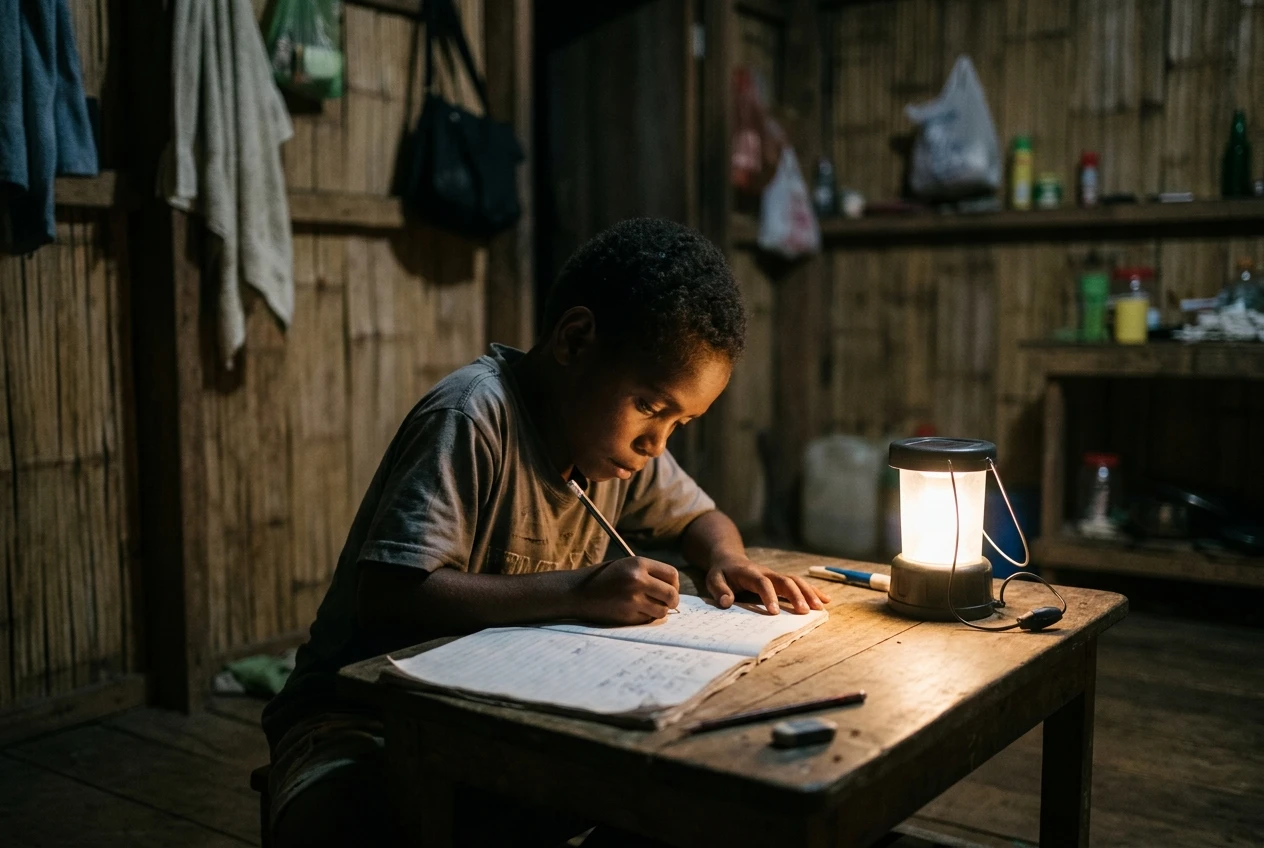
One lamp in a pastor’s house rarely serves only the pastor. After a prayer meeting ends, that same light often moves to the table where a child is finishing schoolwork, or where a wife is finishing a task the day didn’t leave room for. A single lamp ends up carrying the whole household through the evening, not just the ministry part of it. That’s not a side benefit. It’s the same light, doing what light does for everyone under that roof.
Friday: a prayer gathering that runs as long as it needs to
Friday night prayer gatherings in rural Simbu often draw people from more than one household, walking in from different directions to meet together. Without reliable light, the gathering has a built-in time limit nobody chose. With a lamp, the group can keep praying as long as there’s something to pray about, which some nights is longer than others. Nobody’s watching the dark to know when to wrap up.
Saturday: the walk home from a distant hamlet, lit instead of guessed at
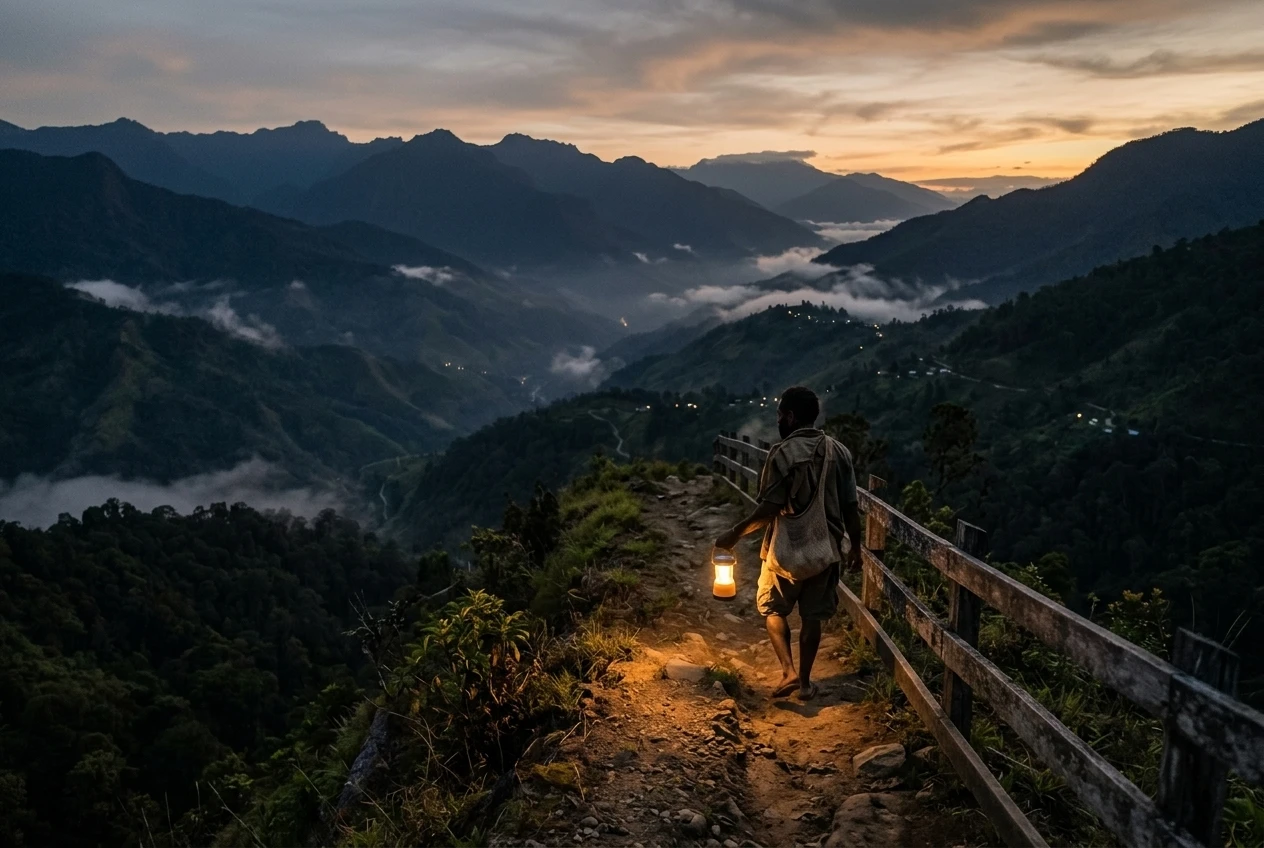
Saturday sometimes means a longer walk, visiting a hamlet further out before Sunday’s service. The walk home at the end of a long day is the one that used to be guessed at: a path half-remembered, feet finding their own way in the dark. A lamp means the ground is actually visible. A pastor arrives home the way he left, on his feet, not stumbling the last mile home.
Sunday: preaching rested, not running on no sleep and no light
By Sunday morning, all of it adds up. A sermon prepared properly instead of rushed. Visits made without fear. A discipleship group that got its full time. A week of sleep that wasn’t interrupted by fumbling in the dark. A pastor who preaches Sunday morning rested is a different thing than one preaching on no sleep and no light, and the congregation can usually tell the difference even if they couldn’t name why.
What one lamp actually gives back over seven days
None of this is one dramatic moment. It’s hours, returned to a pastor who was already doing the work, already carrying the load of ministry and family and farming without complaint. A solar lamp doesn’t make a man faithful. It gives a faithful man back the hours that darkness used to take from him. Multiplied across a week, those hours are a sermon finished properly, a visit made safely, a discipleship group that finishes its thought, a child who gets to study, a prayer meeting that runs its course, a walk home taken steadily, and a Sunday morning preached rested. That is what solar lights for pastors in rural Papua New Guinea actually give back: not a gift handed over once, but a week handed back, every week, for as long as the lamp holds a charge.
If you’d like to help put a lamp into a pastor’s hands like this, visit Get Involve to see how to partner with the next distribution round.
Frequently Asked Questions
Why do rural pastors in rural highlands of Papua New Guinea need solar lamps?
Most bi-vocational pastors in rural PNG split their days between gardening, providing for their families, and shepherding a congregation. Without electricity, all of that ministry work used to stop the moment the sun went down. A solar lamp extends the working day safely into the evening, giving back hours that darkness would otherwise take.
What does a solar lamp actually change for a pastor’s weekly ministry?
It changes the whole rhythm of the week — sermon preparation can continue past sundown instead of being rushed, pastoral visits after dark become safer, discipleship groups can finish a full conversation instead of stopping early, and prayer meetings can run as long as they need to, not as long as the light lasts.
Does the solar lamp only benefit the pastor, or the wider household too?
A single lamp rarely serves only the pastor. After an evening prayer meeting ends, the same lamp often moves to light a child’s homework or help a wife finish an unfinished task. One lamp typically carries an entire household through the evening, not just the ministry portion of it.
How does solar lighting affect pastoral home visits at night?
In rural Simbu, sickness and need don’t wait for daylight, and visits sometimes mean walking to a neighboring hamlet after dark with no streetlights or clear path. A lamp strapped to a hand or bag turns that walk from a real safety risk into something ordinary, without changing how much the visit itself matters.
Does a solar lamp improve sermon quality?
Indirectly, yes. Without light, sermon preparation often got rushed into a single Saturday-night session. With a lamp, a pastor can build a sermon across the whole week, working through a passage for as long as the thought takes — and preach Sunday morning rested instead of running on no sleep and no light.
Is a solar lamp a one-time gift, or does it provide ongoing support?
It’s ongoing. A solar lamp doesn’t make a single dramatic difference once. It gives back hours every single night, week after week, for as long as it holds a charge. Over a year, that adds up to hundreds of hours of ministry, family time, and safety that would otherwise be lost to darkness.
Does a solar lamp replace a pastor’s own faithfulness or effort?
No. A solar lamp doesn’t make a man faithful. It gives a faithful man back the hours that darkness used to take from him. The ministry, the walking, the teaching, and the praying were already happening; the lamp simply removes the time limit that nightfall used to impose on all of it.
How can I help provide solar lamps to pastors in rural Papua New Guinea?
You can partner with the next distribution round by visiting the Get Involved page to see current ways to give, sponsor a lamp, or support an upcoming outreach trip to rural communities in Simbu and surrounding provinces.