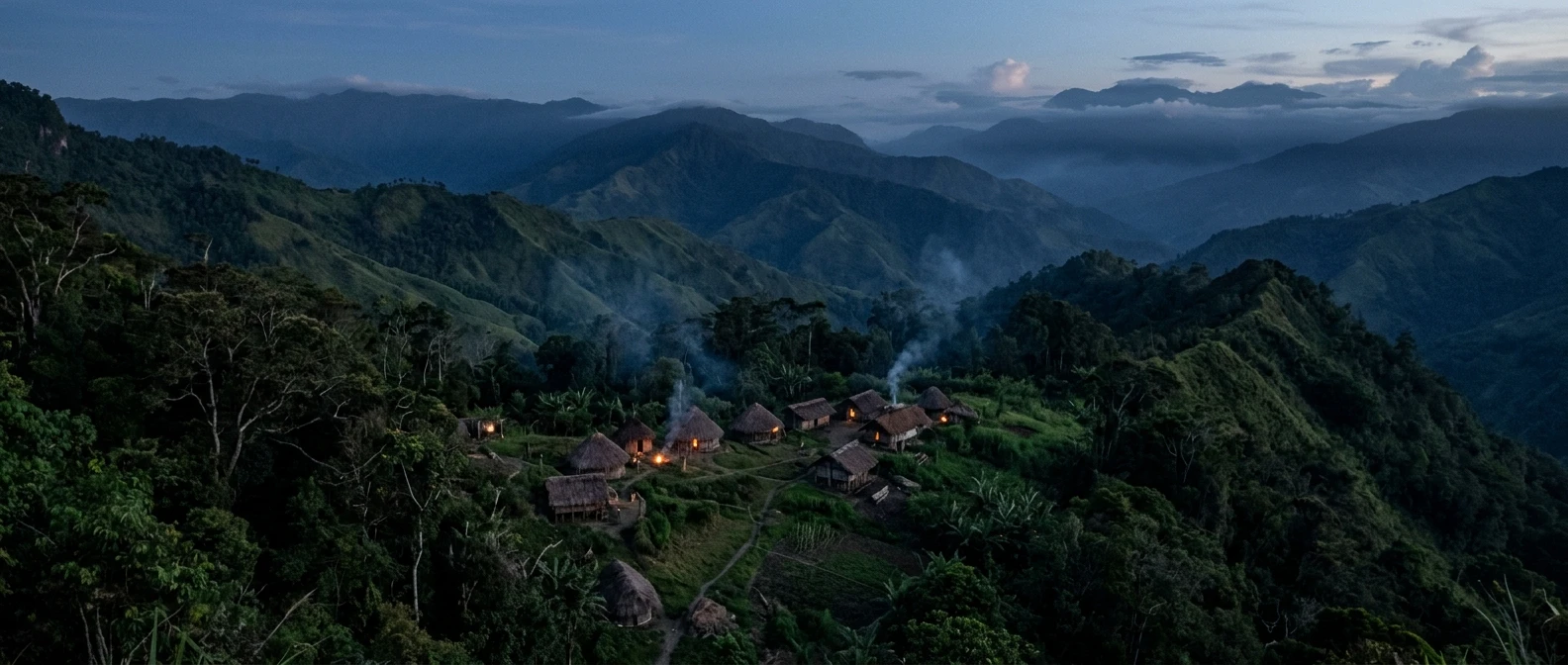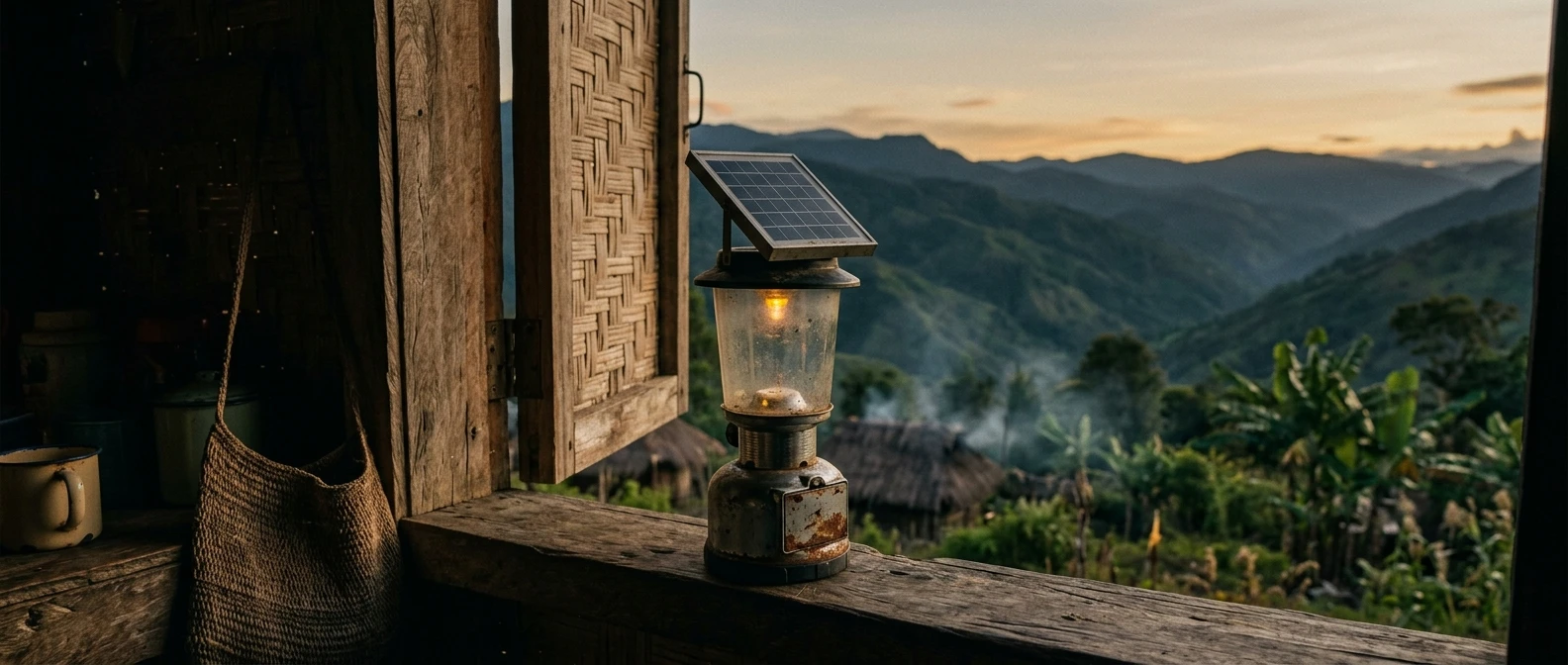

Church ministry without electricity in Papua New Guinea follows a different clock from the one most of us know. In the rural highlands of Papua New Guinea, the day ends when the light does, and the pastors, evangelists and Bible teachers there have long since learned to plan their work around it. This article looks at the whole shape of that work across a week: who can take part, who gets left out, and how the people carrying it manage with so little light.
The evening piece on this site, What Evening Really Looks Like for a Highlands Pastor in PNG, follows one pastor through a single night. Here I want to widen the view.
Why the sun sets on the ministry day before the work is done
Papua New Guinea sits close to the equator, so daylight lasts about twelve hours in every season. Dusk arrives at roughly the same time whether the week is wet or dry, and in villages with no grid power nothing extends the day after it.
Most of the pastors LIGHT PNG serves are bi-vocational, and many are unpaid. They farm to feed their families, and the garden claims the daylight. Ministry gets what remains: the hour or two between the end of the garden work and full dark, and then whatever a kerosene lamp, a torchlight, a candle or a fire can give.
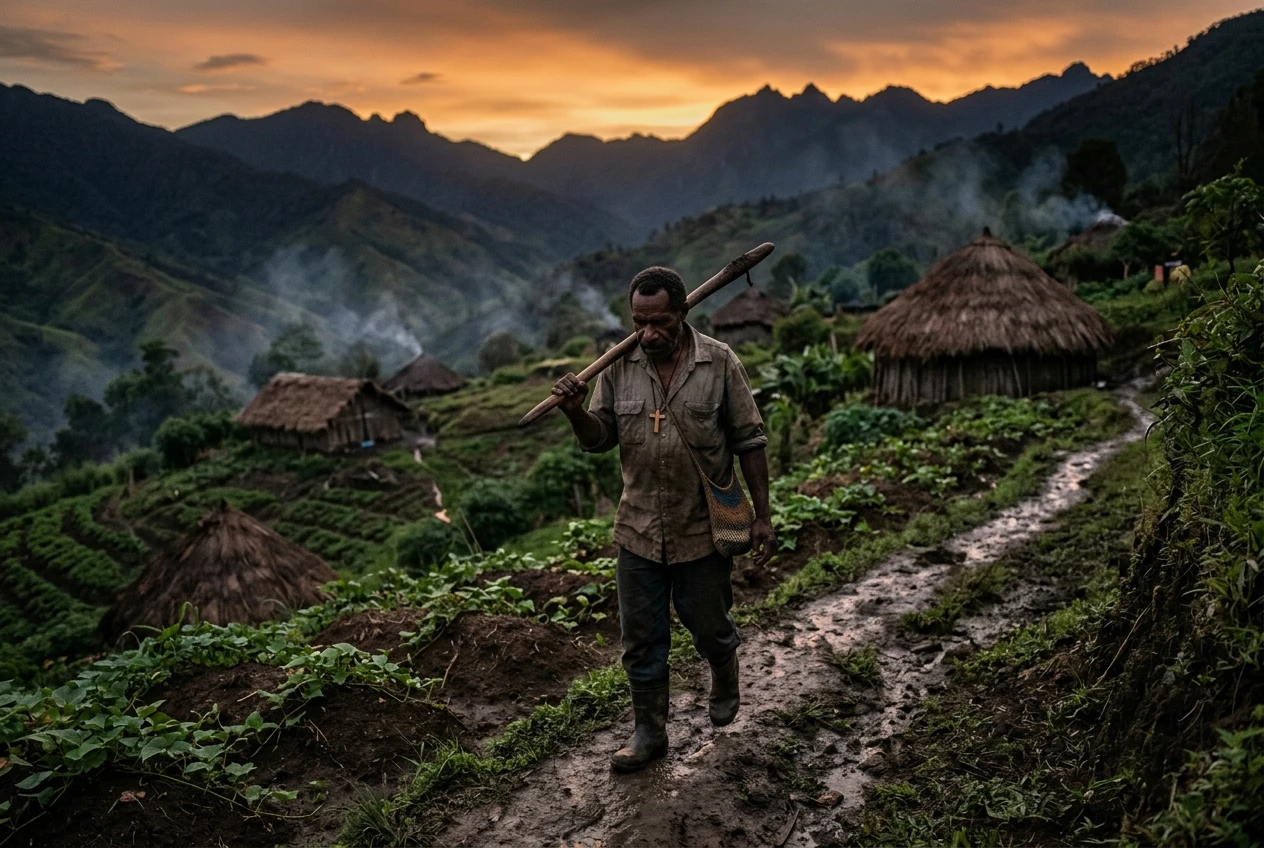
Preparing a message, reading a passage with a family, teaching a young believer to find a verse, and sitting with someone who needs prayer all need some light. When it fails, the pastor does not stop caring. The work simply has nowhere to go until morning, and by morning the garden is calling again.
A week in the life of a bi-vocational pastor: garden by day, Bible study by whatever light is left
A pastor in this position plans backwards from sunset. The garden, the household and the people of the congregation all have first claim on the day, so the question each afternoon is how much usable light is left once the work is done.
That question sorts the week’s tasks by what each one needs:
- Sermon preparation and study need a page and a steady flame, so they take the best of the remaining light.
- Visiting the sick or the grieving can often be done in the last of the daylight, so it is fitted in before dusk.
- Prayer needs no page, so it can carry on into the dark.
- Teaching a Bible study needs both a text and people who can see it, so it is the hardest thing to hold after sundown.
None of this is a picture of people waiting for help. These are capable leaders who have organised a faithful ministry around a hard limit, and the planning itself takes skill. As Psalm 119:105 puts it, “Your word is a lamp to my feet and a light to my path.” These pastors have been carrying that lamp in the Word for years. What they have lacked is a lamp in the hand.
The people the dark leaves out: elders who can’t read the page and children who can’t study
Darkness shuts out some people even when the pastor can prepare and teach. Two groups stand out.
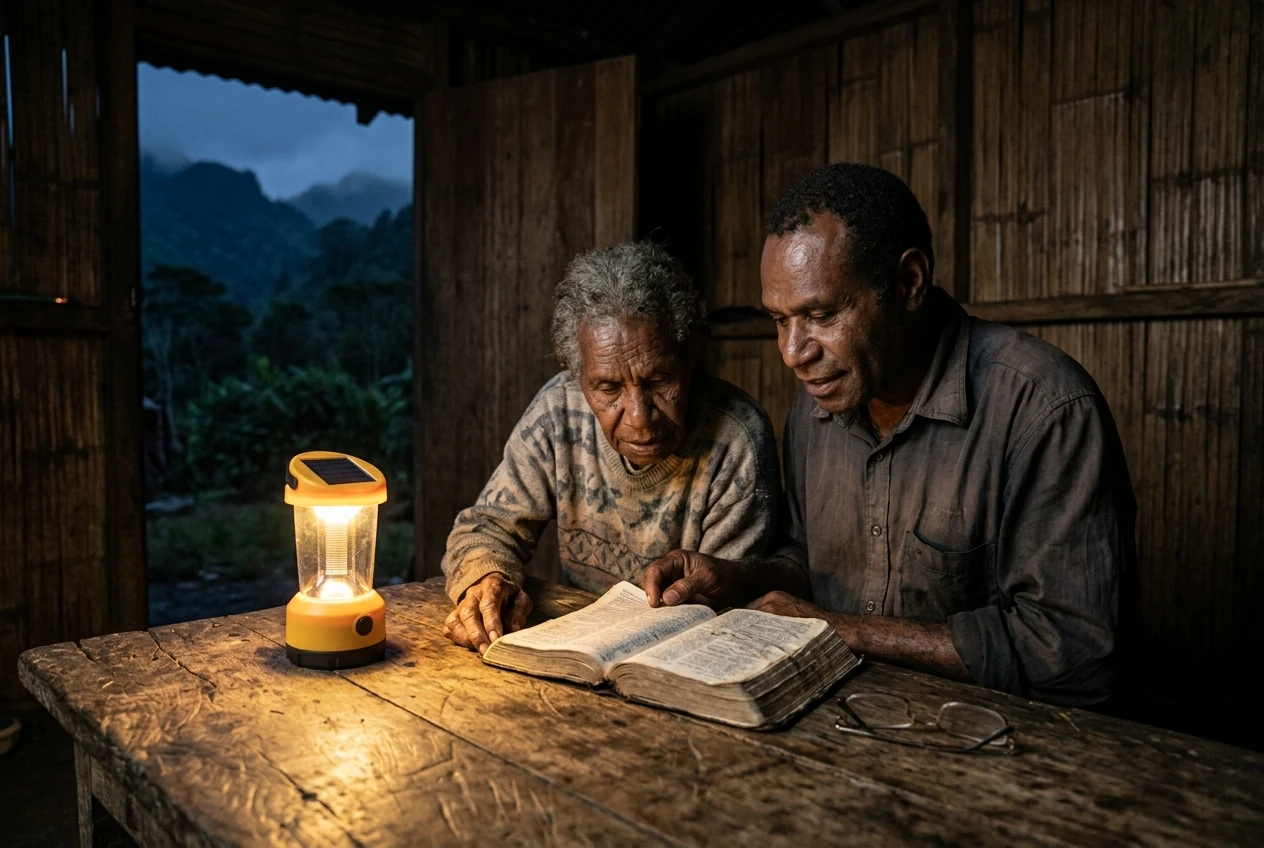
The first is the elders. Many older believers can no longer see clearly enough to read Scripture, and dim lamplight makes it harder still. Someone who has followed Christ for decades may be unable to read the passage being taught, whether the cause is age, weak eyesight or too little light. They listen and remember, but the page is closed to them. Reading glasses and a steady light can change that.
The second is the children. Students who want to study after sunset do it by a flickering flame, or they do not do it at all. Homework, reading practice and Scripture memory all happen in whatever hours light allows. I have written more about that in Solar Light for Students Who Study at Night.
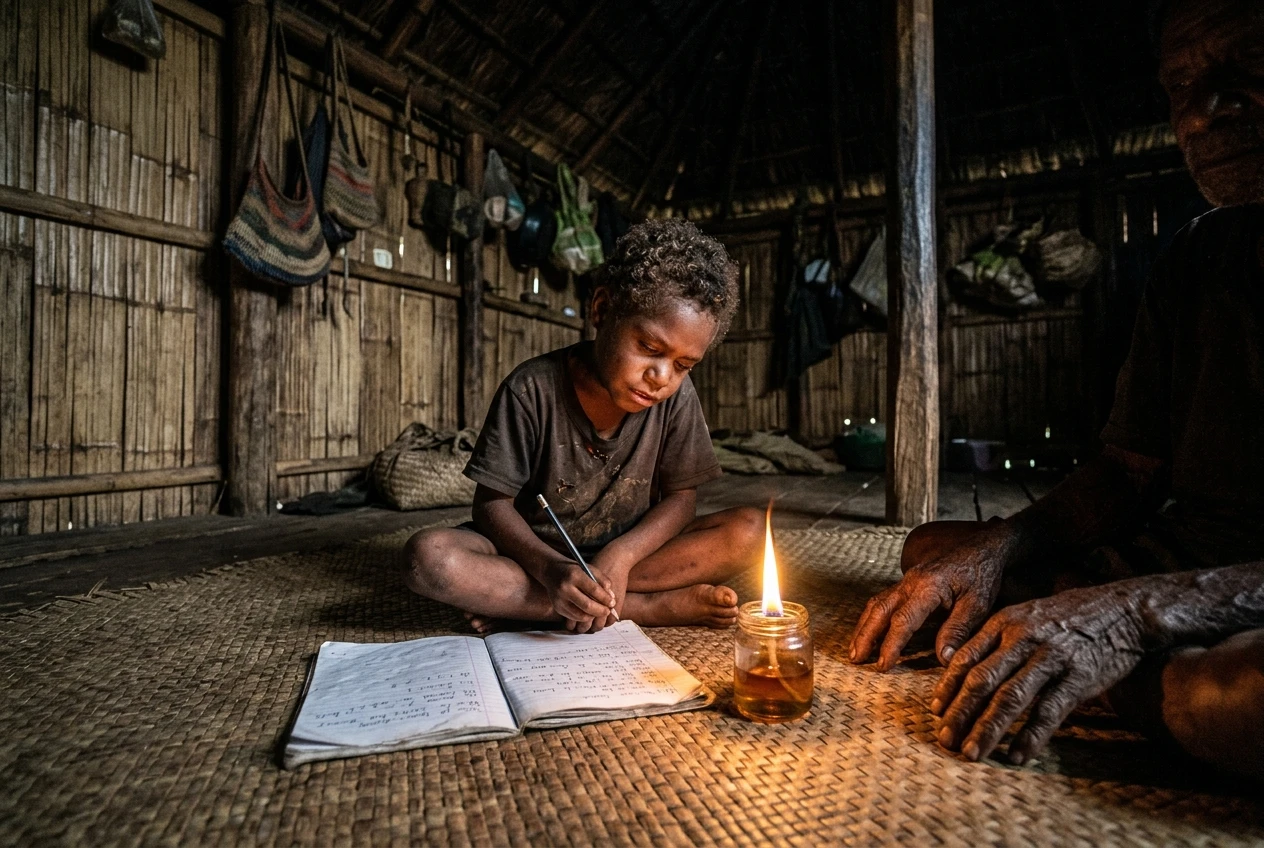
A congregation is a whole community, and the dark reaches every age in it. A pastor with a good lamp can serve more of these people at once.
What a gathering looks like when light is rationed
When light is scarce, the shape of a gathering follows the shape of the light. A few patterns follow naturally from that.
Prayer meetings hold up best, because prayer asks for voices and presence rather than text. A group can gather in near darkness and still pray, sing and encourage one another. The length of the evening is decided by how long the people can stay, and the light has less say in it.
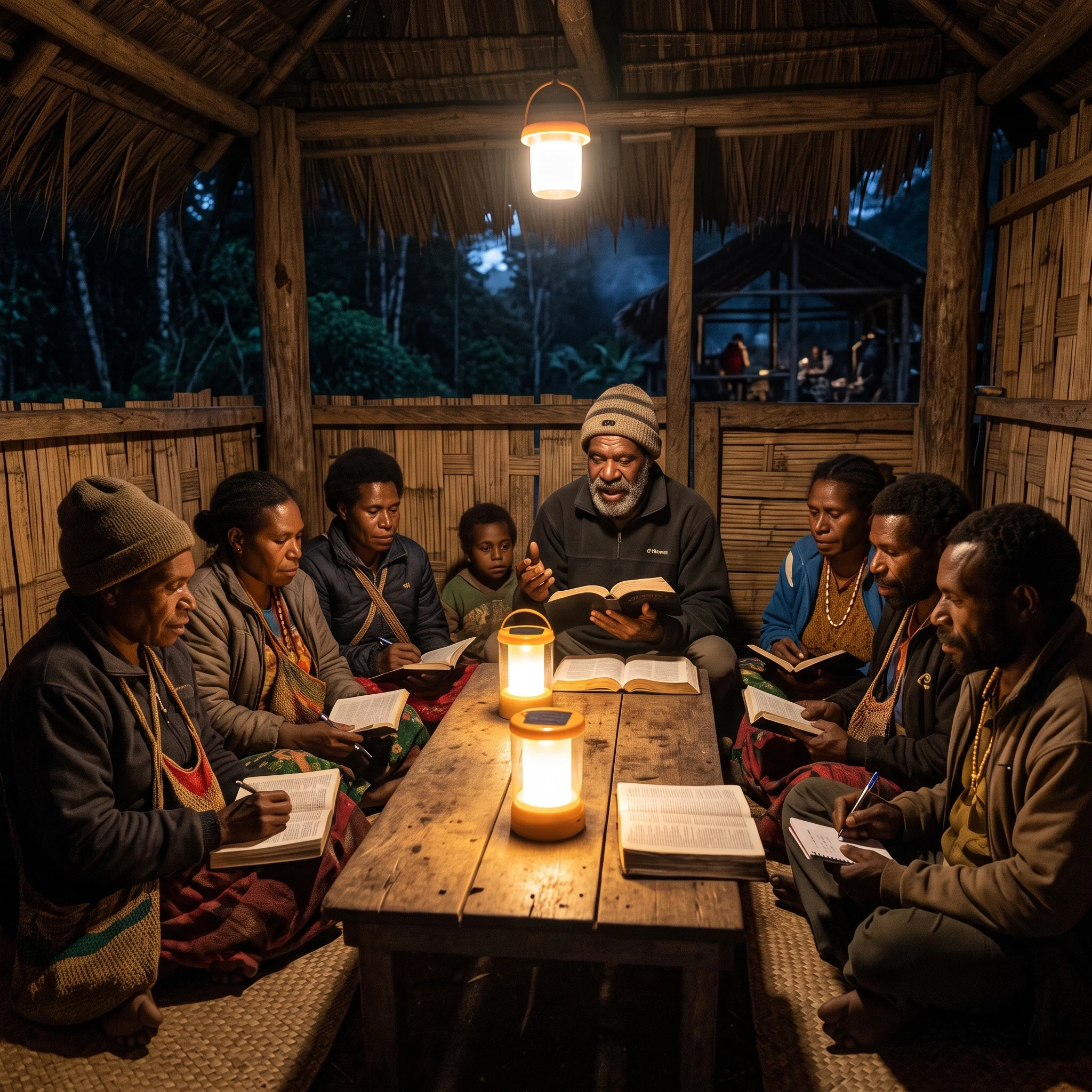
Midweek teaching is harder. Teaching leans on the page, so it tends to be shorter and more tightly planned, and it works best when whoever is reading has the best light in the room. If there is only one lamp, the whole gathering depends on it, and when the fuel, the batteries or the candle runs low the teaching ends with it.
Funerals and other times of grief keep to their own timetable and do not wait for the daylight. When a family needs the church around them in the evening or the night, the pastors come, with whatever light they can bring. Steady light lets that care carry on without anyone stumbling in the dark or the family sitting in it.
In each case the pastor decides how to spend a limited resource. A better light does not replace that judgment. It gives the pastor more room to use it.
What church workers need to keep doing the work
I am not going to put words in any pastor’s mouth. Their own testimonies belong in their own voices, and part of what LIGHT PNG is building is a reporting loop through which recipients send back testimonies and simple impact reports, so supporters hear from the pastors directly and regularly.
What the work itself calls for is clear enough from how these leaders serve:
- Light to extend the hours of ministry after the garden is done.
- Basic training so that the people around them are better protected and cared for, in matters like first aid and CPR.
- Practical tools such as reading glasses, so elders can read the Word again.
- Being seen. Rural pastors are rarely the ones who get thanked, and recognition of their faithfulness is worth giving in its own right.
They already have the calling and the faith. They carry on with joy and resilience, and they do not need to be told how to love their neighbours. What they need are tools that fit the work they are already doing.
Where a solar lamp fits, and where the work goes beyond the lamp
A solar lamp is the starting point, and it is a strong one. It gives a pastor safe, dependable light without buying fuel, and it can change how a whole week is planned. I have set out that case in A Solar Lamp Can Change a Pastor’s Entire Week in Rural PNG.
A lamp also has limits. It does not train a leader, it does not tell a supporter what happened, and it does not decide who in the next valley should receive one. The rest of the work reaches into three areas.
Training. Where we run training, the aim is to leave a skill behind, so that local people can keep teaching and practising it after the visiting team has gone. The Ambuna Primary School visit shows the direction: spiritual teaching for students, CPR and first-aid training with real certificates and kits, and an eyesight clinic giving out reading glasses, all free and all in one afternoon. More on how this works is on the training and support page.
Reporting. Testimonies and short impact reports from recipients let partners see what their giving has done, honestly and on a regular basis, and not only when something impressive happens.
Local leadership. Over time, decisions about who receives support, how training is run and how outreach is coordinated should sit more and more with local church and community leaders. A mission that depends on one person is fragile, and a mission held by many local hands can last.
This is what Matthew 5:14 looks like when it is put into practice: “You are the light of the world.” The pastors of PNG highlands already are. Our part is to help them carry it further into the evening.
If this made you want to stand with a pastor in Eastern Highlands, Simbu, Jiwaka and Western Highlands Provinces, see the ways to partner with LIGHT PNG at Get Involve. There is no pressure, only an open door.